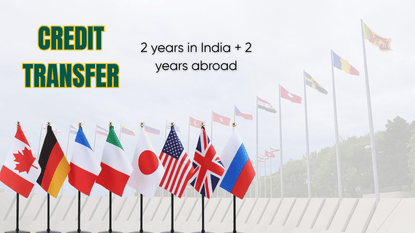
-1751978393.webp)

The landscape to study abroad is evolving. Not in dramatic headlines, but in ways that genuinely matter. If you’re planning to study abroad in 2026 - 27, the experience will feel more structured, more outcome-driven, and more intentional than it did a few years ago.
At Study Smart, we believe universities are becoming clearer about expectations, visa processes are more regulated, and students are expected to plan with purpose rather than impulse. Studying abroad in 2026 - 27 is still very much achievable; it simply requires smarter preparation and the right study abroad consultant to navigate the changing requirements.
Here’s what students and parents should realistically expect while planning for the study abroad 2026 -27 intakes.
Universities across the world are increasingly focused on employability. Courses are being designed to include internships, live projects, research exposure, and real-world case studies. Employers today are less impressed by a degree alone and more interested in how well students can apply what they’ve learned.
In countries like the UK, programs that offer an industrial placement year are gaining importance. These placements allow students to stay in the country longer, gain hands-on industry experience, and significantly improve post-study job prospects. Students who actively build skills alongside academics will find it easier to adapt to changing job markets and stand out after graduation.
Marks still matter, but for study abroad 2026 -27, they are rarely the only deciding factor. Universities are paying closer attention to a student’s overall profile and intent. Along with academics, institutions now look closely at:
A well-rounded profile that shows curiosity, initiative, and relevance often performs better than one focused only on grades. A clear, honest Statement of Purpose that connects past experience with future goals has become especially important.
Visa systems are becoming more documentation-driven across major destinations. Processes are clearer than before, but expectations are also stricter. When you study abroad in 2026 - 27, you must be prepared for rigorous checks.
In the UK, visa regulations have been streamlined, but scrutiny around course relevance and genuine student intent has increased. For the US, strong ties to the home country remain a critical factor during visa interviews. In France, post-study work options have improved, with the PSW duration extended from one year to two years, making it more attractive for international students.
While post-study work opportunities still exist across countries, students choosing courses with weak career alignment may face challenges. Proper planning, accurate documentation, and realistic course choices help reduce visa-related stress.
Studying abroad in 2026 - 27 requires early and careful financial planning. Education loans continue to be a common and accepted funding route, but both universities and lenders are becoming more thorough in their assessments.
Many universities are now asking for financial proof at the admission or even application stage, rather than later in the process. This means students need clarity on funding much earlier than before. Students who start financial planning early enjoy more flexibility when choosing universities, managing expenses, and avoiding last-minute pressure.
Traditional destinations like the UK, USA, Canada, and Australia will remain popular. However, more students are now actively exploring alternatives based on affordability and outcomes.
Countries such as Germany, Italy, France, and other parts of Europe are gaining attention for their lower tuition costs, strong public universities, and growing number of English-taught programs. Dubai continues to attract students for industry exposure and proximity, while Ireland and New Zealand offer balanced academic and work opportunities. For study abroad in 2026 - 27, destination choices will be driven less by trends and more by long-term value.
IELTS, TOEFL, and similar exams will remain essential for admissions and visas. However, once students enter the system, long-term success depends far more on communication skills, adaptability, problem-solving, and industry relevance. Exams open doors. Skills decide how far students go after entering.
Future intakes will demand greater independence from students. Managing academics, part-time work, internships, and networking will increasingly fall on the student’s initiative. Universities provide opportunities, but students who actively seek exposure and take responsibility gain the most from the experience.
Universities are becoming more aware of the emotional and mental challenges international students face. Counselling services, wellness programs, and support systems are being strengthened across campuses. Even so, adjusting to a new country comes with challenges such as homesickness, cultural differences, and academic pressure. Awareness and preparation play a key role in navigating these changes.
For study abroad in 2026 - 27 aspirants, early planning is no longer optional. Students who begin the process early benefit from better university options, higher chances of scholarships, smoother visa processing, and adequate time for test preparation. Late decisions often limit choices and increase stress.
Studying abroad in 2026 - 27 will be about making informed and intentional choices. Students who clearly understand why they are choosing a particular course, country, and university will navigate the journey with far more confidence. The experience isn't becoming harder; it’s becoming more thoughtful.
At Study Smart, we know that with the right guidance, preparation, and mindset, the decision to study abroad remains one of the most valuable academic and personal investments a student can make. If you are ready to begin your journey, consulting a professional study abroad consultant can ensure you are on the right track for the upcoming intake.


 (1)-1787123243.png)

































-1750416362-1750417414.jpg)






















-1749620108.png)