-1751978393.webp)

Paper-based IELTS has ended in India. From September 2026, the IELTS computer-based test is the only way to take IELTS at a test centre in the country, with the final paper sessions held in July and August 2026 (Elets digitalLEARNING, 2026). If you are applying to universities in the UK, Canada, Australia, the US or Europe, you now need to get ready for the screen as well as the English.
The good news is that the test has not become harder. A few skills matter more now, though, and students who practise on a computer early usually feel calmer on test day.
At a glance
IDP Education stopped offering paper-based IELTS in India after August 2026. Listening and Reading are now done on a computer at a test centre. Writing is typed unless you choose the Writing on Paper option at a centre that offers it, and Speaking is still a face-to-face conversation. The content and scoring are the same. What changed is how you answer: Listening and Reading are on a computer, and Writing is typed unless you choose Writing on Paper at a centre that offers it.
IDP Education announced the move on 16 July 2026. It said the goal was to match the test to what candidates now expect and to run test centres more efficiently (Business Upturn, 2026). IDP co-owns IELTS with the British Council and Cambridge University Press & Assessment.
India is one of the largest IELTS markets in the world, so the change affects a very large number of applicants to Canada, Australia and the UK (Business Upturn, 2026). For students in Pune and Delhi NCR, the practical effect is simple: every IELTS seat you book from now on is a computer seat.
The exam pattern, question types, difficulty level, marking system and band scores are all the same as on paper. The test still takes 2 hours 45 minutes. A Band 7 earned on screen means exactly what a Band 7 on paper meant, so universities and visa officers read your score the same way.
IDP Education has confirmed there is no change to the IELTS exam pattern, question types, difficulty level, marking system or scoring process after the move to computer delivery (Elets digitalLEARNING, 2026).
The Speaking test is also unchanged. You still sit across from a certified IELTS examiner and talk through the same three parts. Your speaking practice does not need to change because of the switch.
The Academic and General Training versions also stay as they were. Students heading to universities take IELTS Academic. Young professionals planning to migrate usually take General Training.
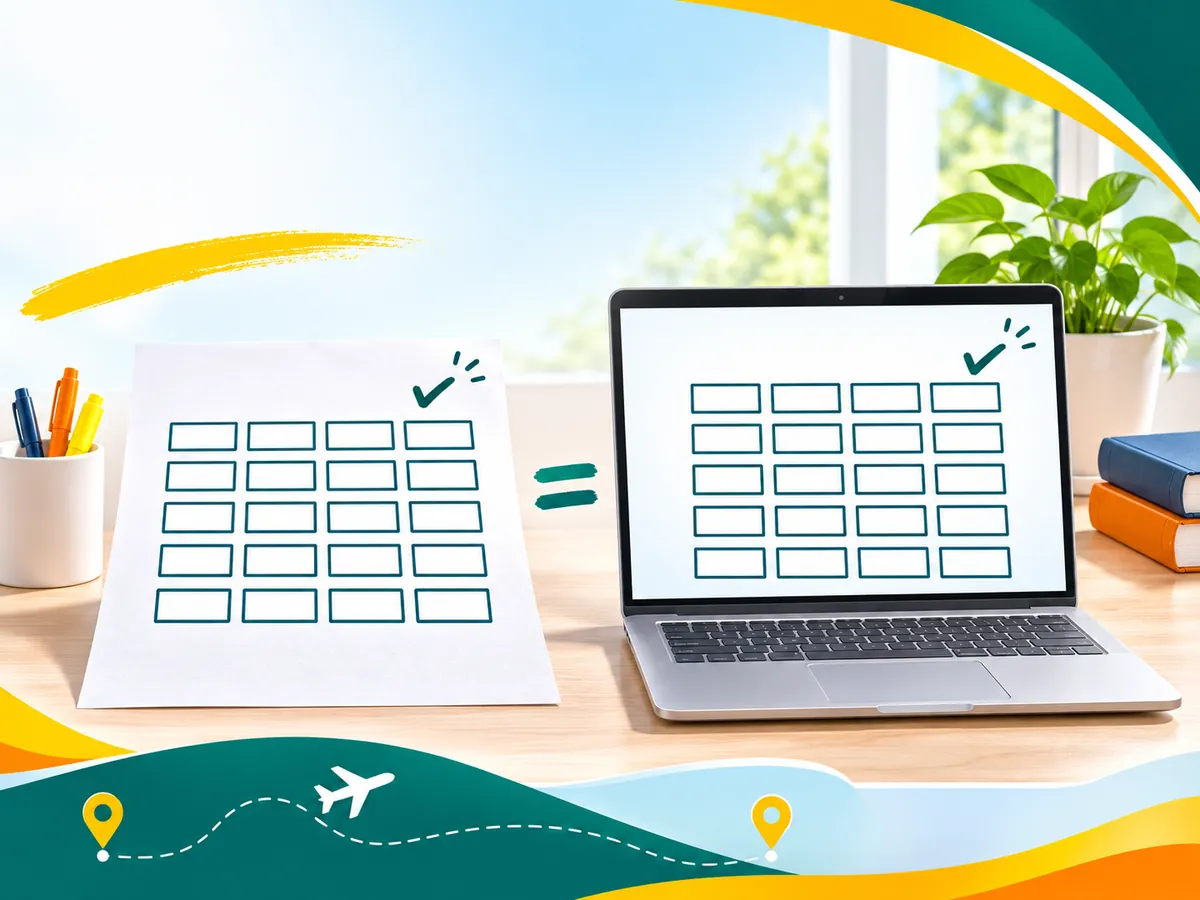
Indian students now take the standard IELTS on computer, where you type all your Writing answers. Reports of the change say a version called IELTS on computer (Writing on Paper) is offered in India at selected centres. In this version you handwrite only the Writing section. Ask your nearest centre whether it offers the handwritten version before you book.
With the IELTS Writing on Paper option, the Writing tasks appear on screen, but you answer in pen on an IELTS Writing Answer Sheet. Your Test Report Form does not show that you picked this option, so universities cannot tell the difference (IELTS.org). Here is how the formats compare:
At a glance
For most students, the fully computer-based version is the better choice because the results come quickly and One Skill Retake is available. Writing on Paper suits candidates who type very slowly and have no time to build speed before their application deadlines.
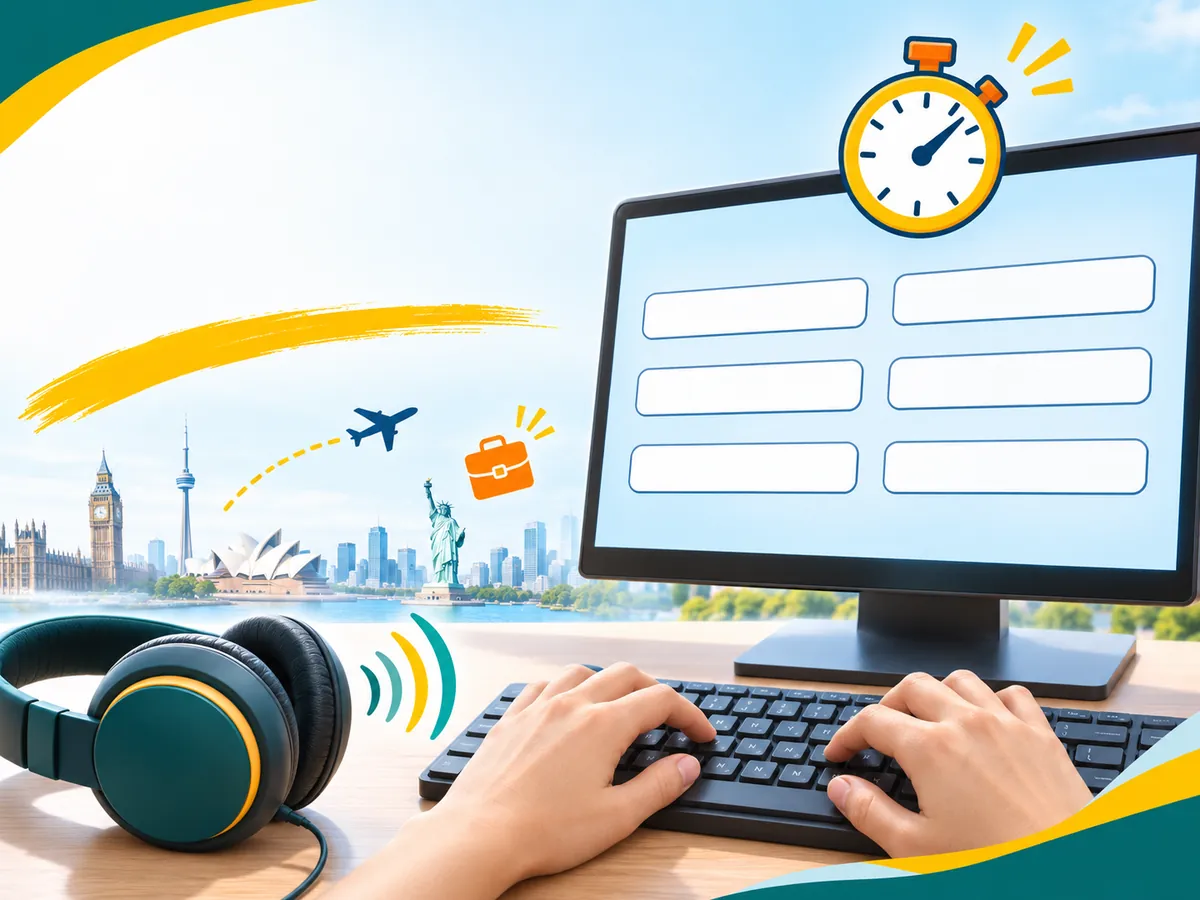
IELTS on computer is not harder in content, because the questions and marking are the same. It feels different, though. You read long passages on a screen, type your essays, and in Listening you have no extra time to copy answers onto a sheet. Students who practise on screen usually adapt within a few weeks.
The biggest change is in Listening. On the computer test, you type answers while the recording plays, and you get only 2 minutes at the end to review them, not the 10 minutes paper candidates used to get (IDP IELTS, accessed 2026). If you used to scribble rough notes and tidy them up later, you need to break that habit.
The computer test also gives you useful tools. A clock sits at the top of the screen and flashes as the Reading and Writing sections near their end (IDP IELTS, accessed 2026). You can highlight text, add notes, and see a live word count in Writing, which removes the need to count words by hand.
Typing also makes Writing easier to edit. You can move a sentence, fix a spelling mistake or add an example without crossing anything out (Elets digitalLEARNING, 2026). The catch is that slow typists lose minutes they would otherwise spend planning.
IELTS One Skill Retake lets you resit one section (Listening, Reading, Writing or Speaking) without taking the whole test again. You must have taken a full IELTS on computer test at a centre that offers the retake, and you must sit the retake within 60 days. You can use it once per full test.
Those rules come from the official IELTS booking guidance (IELTS.org, One Skill Retake). One Skill Retake results usually arrive in 3 to 5 days (IELTS.org for organisations). The price varies by centre, so confirm it locally.
Here is an example. Say a student needs 6.5 in every band and scores 7.0, 7.5, 6.0 and 7.0. That student can retake only Writing instead of all four sections. Before you pay, check that your target university accepts One Skill Retake results, because acceptance is set by each institution. If you need IELTS for a visa or migration, also check that the visa or immigration authority accepts One Skill Retake results before you plan around it.
Good computer-delivered IELTS preparation trains three things together: your English, your typing, and your focus on a screen. The 6-week plan below assumes you study about 2 hours a day. If you start with weaker English, stretch each stage, but keep practising on a computer from the first day.
A common mistake is practising on a phone. Phone screens and touch keyboards build the wrong habits, so use a laptop or desktop for every timed session.
The example below is an illustration, not a specific student. Picture a final-year engineering student in Kothrud, Pune, aiming for a UK master's programme. She is strong in Reading but types slowly and handwrote every essay in college.
Under the old system, she might have booked a paper test and relied on her handwriting. Now she spends two weeks building typing speed, takes her first computer mock, and finds her Writing timing improves once she stops planning on paper. If her Writing band still falls short, One Skill Retake gives her a second chance at that section within 60 days. That keeps her application timeline intact.
A Delhi NCR professional applying for General Training faces a similar choice. Someone who types all day at work may find the computer test easier than paper ever was. The lesson is that how much you need to prepare for the screen depends on your habits, not on your English level alone.
You book IELTS on computer through IDP Education's official IELTS booking channels or an authorised partner. Choose Academic or General Training, pick a test centre and date, and keep the same valid passport for the test and any later retake. Book early if your university deadline is close.
If you are looking up test dates for IELTS on computer in India, you probably want two answers: when the next slot is and which centre is nearest. Computer-based tests are usually scheduled more often than paper tests were, but popular dates in Pune and Delhi still fill up before admission deadlines. Plan your test date at least 6 to 8 weeks before your earliest application deadline so a retake still fits.
If you are still deciding where to apply, set your IELTS target after you shortlist universities. Our guide on how to apply to foreign universities explains how score requirements fit into the wider application process.
For students and parents in Pune and Delhi NCR, the switch to computer delivery is mostly good news. Results arrive faster, and One Skill Retake can save you the cost and stress of a full resit. Your preparation needs to change, though, especially if you have never typed an essay under time pressure.
Study Smart's Cambridge-certified trainers have prepared more than 14,000 students for IELTS, including over 4,000 online (Study Smart, 2026). You can prepare with us through online IELTS training or classroom IELTS training, whichever format suits you.
No. IDP Education ended paper-based IELTS in India after August 2026, and all tests from September 2026 are computer-delivered. Speaking is still face-to-face with an examiner.
The IELTS computer-based test is accepted wherever paper IELTS was, because the content and scoring are the same. Still confirm your course's test and band requirements. Always confirm the minimum band your course needs.
IELTS on computer results are usually available 1 to 5 days after the test. If you take the Writing on Paper version, results come within 5 days.
Yes, through IELTS One Skill Retake, but only after a full IELTS on computer test at a centre that offers it. You must sit the retake within 60 days, and you can use it once per full test.
You do not need to be an expert typist, but slow typing eats into your planning and checking time in Writing. Two to three weeks of daily typing practice on a standard keyboard helps most students.
Ready to practise on the real format? Join Study Smart's IELTS test preparation classes with Cambridge Certified trainers, online or in the classroom, or talk to a counsellor in Pune or Delhi.