-1751978393.webp)

From 30 November 2026, the UK student visa proof of funds requirement goes up. Students who apply on or after that date must show £1,570 a month for a London course or £1,203 a month elsewhere in the UK, for up to nine months (OTS Solicitors, 2026). If your family saved up to the old figure, even a small shortfall can get the visa refused.
This guide explains the new amounts, which date decides your figure and how to plan your bank balance from India. It includes two worked examples and a date-by-date plan for the 28-day rule (GOV.UK, 2026).
At a glance
The Home Office has raised the monthly living-cost amount that Student visa applicants must prove. Anyone applying on or after 30 November 2026 must show £1,570 a month for a London course or £1,203 a month elsewhere, for up to nine months. Any unpaid first-year tuition is still added on top (OTS Solicitors, 2026).
The monthly rise is £41 in London and £32 outside London. Over the nine-month maximum, that adds £369 for London students and £288 for everyone else (OTS Solicitors, 2026).
These amounts look small, but visa officers check the closing balance down to the pound. A family that planned around the old London total of £13,761 would now fall short if the student applies after the change (OTS Solicitors, 2026).
From 30 November 2026, a Student visa applicant studying in London must show £1,570 a month for up to nine months, up from £1,529 (OTS Solicitors, 2026).
One practical warning: when we checked on 14 November 2026, the GOV.UK Student visa money page still showed the old figures (GOV.UK, 2026). That page shows the rules in force today, not the rules from the change date. If you plan to apply after the change, plan around the new figures even if the official page has not been updated yet.
The increase is a yearly uplift, not a one-off crackdown. The Home Office ties the student living-cost figure to the maintenance loans that UK home students can get for the 2026/27 academic year, and it says it will keep the two aligned in future (GOV.UK HC 584 Explanatory Memorandum, 2026).
Ministers first agreed to a yearly uplift in May 2024, as part of a package of measures against misuse of the Student route. The Home Secretary confirmed the policy in a statement on 30 July 2024 (GOV.UK HC 584 Explanatory Memorandum, 2026).
For Indian families, the lesson is simple: expect the figure to change every year. Older blog posts and WhatsApp forwards often quote figures that are now out of date. Always check the amount against the rules in force on your planned application date.
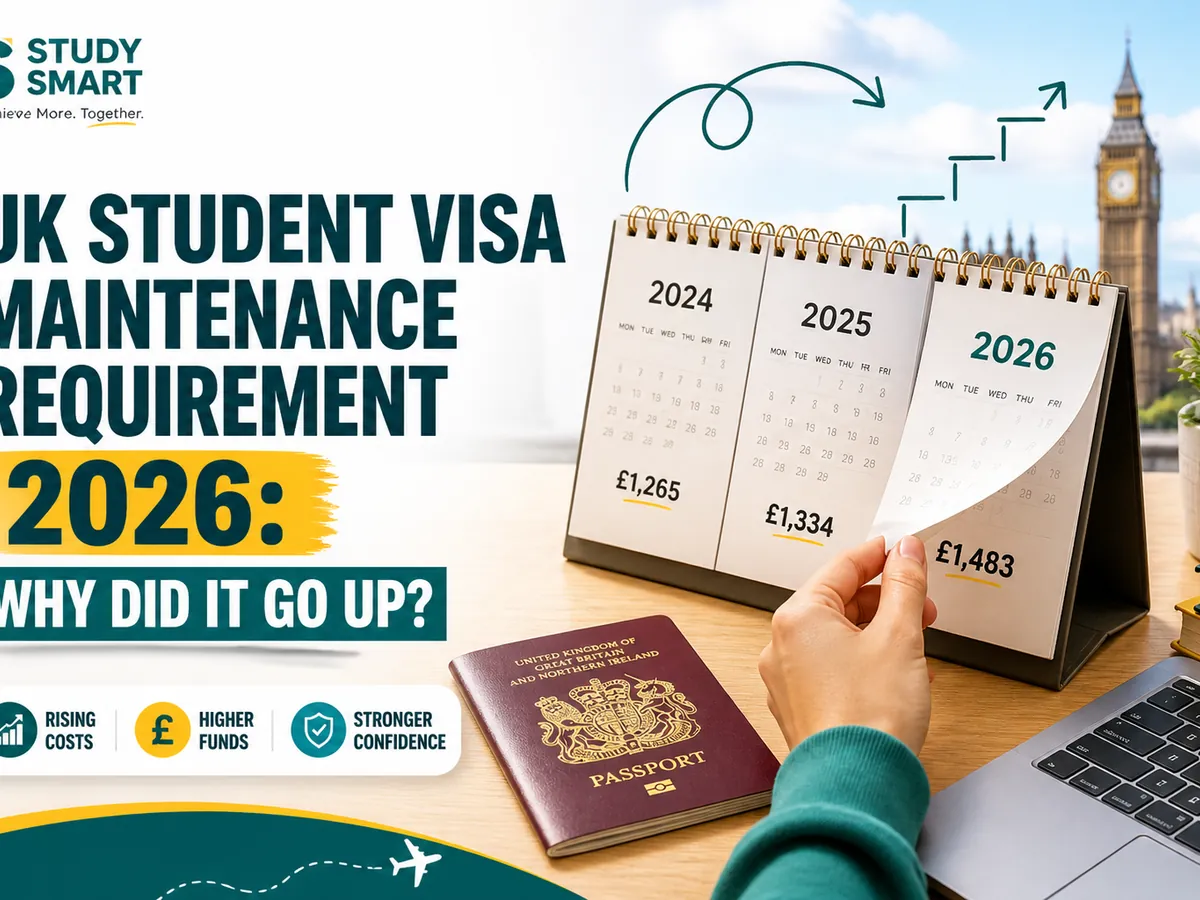
Your application date decides your figure. If you submit before 30 November 2026, the old amounts apply. If you submit on or after that date, the new amounts apply, even if your CAS was issued earlier or your bank statement is dated before the change (OTS Solicitors, 2026).
This matters most for January 2027 intake students, who usually apply in late November or December. A student who got a CAS in October and planned to apply in early December should top up to the new total now. Do not assume an older CAS keeps the old amount.
If you are ready to apply before the change, applying early is a valid choice. However, rushing an incomplete file to save a few hundred pounds is a poor trade. A refusal costs far more in time and fees than the extra money.
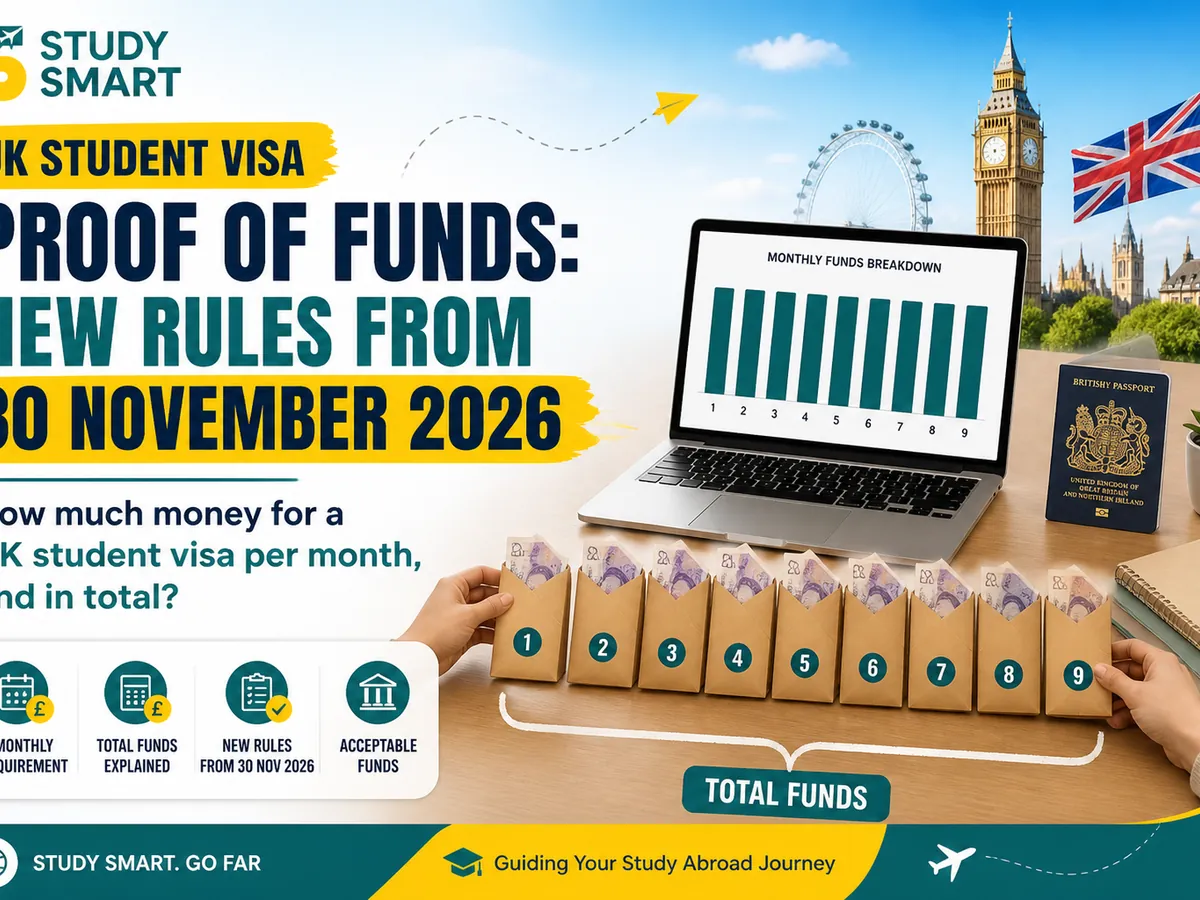
You need one month of living costs for each month of your course, capped at nine months. Part months are rounded up to a full month. On top of that, you must show any first-year tuition still unpaid on your CAS. A deposit you have already paid to the university is taken off (OTS Solicitors, 2026).
Most Indian students take a one-year master's, which is longer than nine months, so they hit the cap. That means £14,130 for London or £10,827 outside London, plus outstanding tuition (OTS Solicitors, 2026). A three-year bachelor's degree uses the same nine-month cap, because you only prove the first year.
The accommodation offset can reduce your total. If you have paid your university for accommodation it arranged, you can deduct up to £1,570 (OTS Solicitors, 2026). Rent paid to a private landlord or a booking agent does not count, so a deposit on a private flat in Manchester will not lower your figure.
"London" means a course at a campus inside the 32 London boroughs or the City of London. Check the campus address on your CAS. Some universities with a London name teach at campuses outside London, and some outside universities run London campuses.
The two cases below use illustrative tuition figures. Your own CAS will show your exact outstanding fee, so swap in your numbers and follow the same method.
Aditi has a CAS for a one-year MSc in Leeds showing £22,000 of tuition still owed, an illustrative figure after her deposit. She applies on 4 December 2026, so the new outside-London cap of £10,827 applies (OTS Solicitors, 2026). Her target is £32,827.
Aditi has also paid £800 to the university for its halls of residence, which is under the offset limit (OTS Solicitors, 2026). Her final figure falls to £32,027. Had she applied before the change, she would have needed £288 less.
Rohan has a CAS from a central London university showing £30,000 of unpaid tuition, again an illustrative figure. Adding the London cap of £14,130 gives a target of £44,130 (OTS Solicitors, 2026). He plans to cover the tuition with an education loan and the living costs with his father's savings.
Rohan's loan letter must come from a regulated lender and be dated no more than six months before he applies. His father's account counts if Rohan shows proof of the relationship, such as a birth certificate, plus a written consent letter (GOV.UK Appendix Finance, 2026).
The rupee balance is converted at the OANDA spot rate on the day Rohan applies (GOV.UK Appendix Finance, 2026). If the rupee weakens between his statement and his application, his balance could fall below £14,130 in pounds. Keeping a comfortable buffer above the converted target protects him from that risk.
The full required amount must stay in your account for 28 days in a row. The 28-day period must end no more than 31 days before you apply (GOV.UK, 2026). If the balance drops below the target for even one day, the 28 days normally start again (OTS Solicitors, 2026).
UKVI (UK Visas and Immigration) counts the period backwards from the closing balance on your latest statement (GOV.UK Appendix Finance, 2026). Here is a date-by-date plan using Rohan's case:
The money must be easy to access and held with a bank that UKVI can check. Funds are rejected if the bank is not regulated, does not keep electronic records or cannot be verified. Overdraft limits never count (GOV.UK Appendix Finance, 2026).
These sources are usually accepted, subject to the rules above:
Be careful with fixed deposits, mutual funds and property. Investments that cannot be withdrawn immediately should not be counted (OTS Solicitors, 2026). A fixed deposit that can be broken early may be accepted, but this is our practical reading, not a stated rule, so get the bank to confirm in writing that the money can be withdrawn.
Some nationalities can skip upfront financial evidence, but India is not on that list. Indian applicants must submit full financial evidence with the application (GOV.UK, 2026). Indian families should prepare full evidence either way, so a request for documents never catches them out.
If you are a student in Pune or Delhi NCR aiming for the January 2027 intake, recalculate your target today using the new figures. Then compare it with what is actually sitting in the account you plan to use. For most families the gap is a few hundred pounds, which is easy to close now and painful to discover after a refusal.
Parents funding the visa should agree on one account and leave it untouched for the full period. Mixing household spending, business payments or EMIs into that account is the most common way families break the 28-day rule.
Use this checklist before you book your biometrics appointment:
Funds also come up at the credibility interview, where officers may ask who is paying and how. Our visa interview preparation sessions help you get ready for questions about your funds. If you have not yet shortlisted universities, our guide on how to apply to foreign universities shows how tuition choices shape the money you must prove.
Our team includes former high commission employees and trained student visa documentation experts. We help you calculate the right amount and present your proof of funds. As your next step, book a free student visa consultation with our student visa documentation services team in Pune or Delhi.
No. Applications made before 30 November 2026 are decided under the rules in force on 29 November 2026, so the old figures apply (OTS Solicitors, 2026). What counts is the date you submit the application, not your CAS date.
Yes. You must show proof of the relationship, such as a birth certificate, and a written consent letter from the parent (GOV.UK Appendix Finance, 2026). The account must still meet the 28-day rule in full.
An education loan counts if the lender is regulated to issue student loans. The loan letter must be addressed to you and dated no more than six months before you apply (GOV.UK Appendix Finance, 2026).
A shortfall on even one day normally restarts the 28-day period (OTS Solicitors, 2026). You would need a fresh 28 days and a new statement before applying, so keep a buffer and avoid any withdrawals.
No. Only payments made to your university for accommodation it arranges can be deducted, up to £1,570 (OTS Solicitors, 2026). Rent or deposits paid to private landlords or agents do not reduce your figure.




-1766748863.jpg)
























 (4)-1792570898.png)