-1751978393.webp)
-1789648214.png)

Taking your academic journey international is one of the most transformative decisions you can make. It opens doors to global career opportunities, world-class research facilities, and diverse cultural experiences. However, as tuition fees and living costs in popular study destinations continue to rise, securing reliable financial backing is often the biggest hurdle for Indian students.
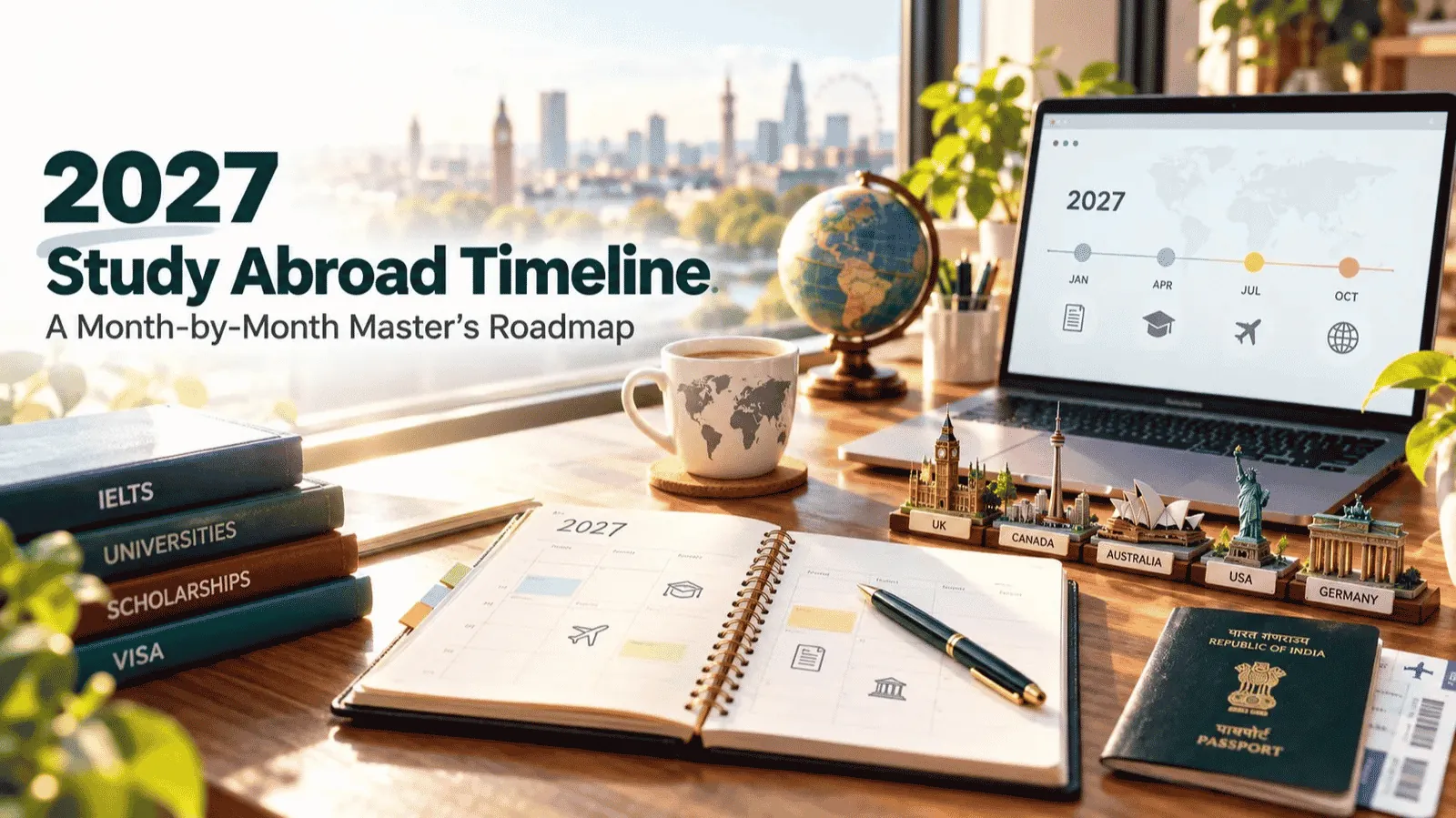
If you are setting your sights on the upcoming academic years, particularly aiming to secure education loans for study abroad 2027, starting your financial planning now is not just recommended—it is absolutely essential. The landscape of international student financing is evolving, with lenders offering higher limits but also scrutinizing applications more closely.
In this comprehensive guide, we will break down the intricacies of the student loan application process, detail the differences between secured and unsecured loans, explain the crucial role of your co-applicant, and outline a realistic timeline so you can confidently step onto your dream campus.
You might be wondering why you need to worry about 2027 funding right now. The reality is that international admissions and financial preparation are deeply intertwined. Universities and embassies require stringent proof of funds before they will issue admission letters and student visas.
By assessing your financial readiness early, you give your family ample time to arrange liquid funds, evaluate property for collateral, and boost CIBIL scores if necessary. Furthermore, early planning gives you the breathing room to focus on your academic prerequisites without the looming anxiety of loan rejections.
Before any bank will officially sanction a large overseas education loan, you need an admission offer from a recognized foreign university. To get that offer, you must clear your standardized tests.
Language proficiency is non-negotiable. Many students begin their preparation by enrolling in top-tier ielts coaching online india to get a head start. For students who thrive in traditional classroom environments, seeking out reputed ielts coaching in pune or comprehensive ielts classes pune can provide the structured environment needed to score a 7.0+ band. A strong academic profile and high IELTS score not only secure your university seat but are also viewed favorably by banks, as they indicate a serious, capable student with strong future employability.
When exploring funding options, you must first understand what the loan actually covers and what will be expected of you. Typically, a comprehensive overseas education loan covers:
It is vital to note that banks rarely fund 100% of your expenses. Most lenders enforce a "margin money" requirement, usually around 10% to 15%. This means if your total education cost is ₹50 Lakhs, the bank will fund 85% (₹42.5 Lakhs), and you are expected to fund the remaining 15% (₹7.5 Lakhs) out of pocket. Understanding this early ensures you are not caught off guard when the first tuition installment is due.
One of the most common questions our counselors receive revolves around collateral. Indian banks generally divide education loans into two categories: secured and unsecured.
Traditionally, banks offered non-collateral loans only up to ₹7.5 Lakhs. However, the financial market has matured. Today, if you are admitted to a premier global institution (often termed 'A-list' universities by lenders), you can secure unsecured loans of up to ₹40–50 Lakhs. These are granted based on the university's global ranking, the specific STEM or business program you are entering, and the strong financial profile of your co-applicant.
If your funding requirement exceeds the unsecured limit, or if your university is not on the bank's premium list, you will need a secured loan. Secured loans generally offer lower interest rates, longer repayment periods (up to 15 years), and higher loan limits (sometimes up to ₹1.5 Crores).
Acceptable collateral typically includes:
Whether your loan is secured or unsecured, almost all Indian lenders require a financial co-applicant. This is usually a parent, spouse, or occasionally a parent-in-law or sibling.
The bank assesses the co-applicant’s financial health to ensure the interest can be serviced during your study period (the moratorium period). The co-applicant's profile is evaluated based on:
If a parent is retired or does not have a sufficient taxable income, a primary earner in the immediate family may need to step in as a financial co-borrower.
Navigating the banking bureaucracy can be overwhelming, but breaking it down into actionable steps simplifies the journey. Here is a timeline-based look at the student loan application process for the 2027 intake:
Determine your total budget. Work with your overseas education consultant to factor in tuition, living costs in your target city, and inflation. Compare this against your family's savings to find the exact loan amount required.
Do not wait for your admission letter to start gathering financial documents. Property evaluations, fixing errors in title deeds, and updating KYC documents take time. Ensure your co-applicant’s ITRs are filed perfectly.
Apply to 2-3 banks simultaneously. Compare their interest rates, processing fees (which usually range from 0.5% to 1%), and hidden charges like pre-payment penalties. Getting a pre-approved loan letter based on your GRE/GMAT/IELTS scores can also strengthen your university applications.
Once you receive your unconditional offer letter from the university, submit it to the bank. The bank will conduct its final legal and technical verification (if collateral is involved) and issue the official Sanction Letter. This document is critical—it is the primary proof of funds you will show to the embassy for your student visa.
The bank will disburse the tuition fee directly to the university’s bank account. Living expenses are typically loaded onto a forex card or sent to a blocked account, depending on the destination country's regulations.

Financial requirements vary wildly depending on where you choose to study. Aligning your loan structure with your destination's visa rules is critical to avoiding last-minute visa rejections.
Beyond just securing the loan, how you manage your money overseas dictates your financial health upon graduation. Here are some essential tips for study abroad:
Securing admission to a top-tier university and finalizing a massive financial loan simultaneously is a high-stress endeavor. As one of the best study abroad consultants india, Study Smart serves as a bridge between your academic aspirations and financial realities.
Our dedicated study abroad loan assistance team maintains strategic tie-ups with leading public and private sector banks, as well as NBFCs (Non-Banking Financial Companies). Because we facilitate hundreds of applications, we can often negotiate better interest rates, secure faster processing times, and waive exorbitant processing fees for our students.
Whether you are looking for study abroad consultants in pune, need the expertise of overseas education consultants pune, or are based out of the coast seeking overseas education consultants mumbai, our regional offices are equipped to offer personalized, face-to-face guidance. We don't just hand you a university brochure; we hold your hand through the entire journey—from test prep and university shortlisting to visa documentation and loan disbursement.
The 2027 intake might seem distant, but in the realm of international education, the early bird truly gets the worm. The sooner you evaluate your financial readiness, the smoother your journey will be.
If you are feeling overwhelmed by margin money, collateral evaluations, or visa financial requirements, you do not have to navigate it alone. Let our experts handle the heavy lifting of the financial bureaucracy so you can focus on building an undeniable academic profile.
Ready to make your global education dreams a reality without the financial stress? Speak to our experts and explore your customized funding options today.
Explore more: study abroad loan assistance







































-1750416362-1750417414.jpg)



-1791613809.jpg)


-1789648364.png)
-1789647708.png)
 (1)-1787123243.png)
















-1749620108.png)
















-1790830806.png)

-1789648032.png)
-1789647864.png)

-1789648649.png)




-1790228836.png)

-1790399182.png)