-1751978393.webp)

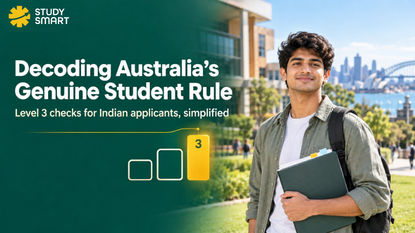
Australian Department of Home Affairs regulations for international applicants have introduced heightened financial thresholds, strict English language benchmarks, and the comprehensive Genuine Student (GS) evaluation framework. For Indian scholars planning their tertiary education across the 2026–2027 academic intakes, navigating these Subclass 500 modifications requires strategic academic planning and verified documentation.

The major Australia student visa changes enforce a heightened minimum living cost requirement of AUD 29,710, elevated IELTS/PTE language benchmarks, and the implementation of the targeted Genuine Student assessment. These policy revisions aim to ensure international applicants possess the academic capability and financial resilience required to sustain their degree programs without unapproved reliance on casual employment.
The Australian Government Migration Strategy restructured the Subclass 500 student visa framework to prioritize educational integrity and skills-matched migration pathways. Prior regulatory structures utilized the Genuine Temporary Entrant (GTE) statement, which often penalized students who expressed long-term migration aspirations even in fields experiencing severe national skill shortages.
Under the updated operational model, the Department of Home Affairs evaluates whether an applicant's chosen qualification delivers tangible career momentum within their home country or within permissible post-study employment frameworks. Documentation must prove that the financial investment of overseas study aligns proportionally with the applicant's anticipated post-graduation remuneration.
At a glance
The Genuine Student requirement evaluates applicants through targeted contextual questions assessing academic history, prospective career compensation, chosen course logic, and home-country socioeconomic connections. This framework requires concrete documentary evidence demonstrating why a specific Australian degree offers superior value over domestic academic alternatives available in India.
Rather than composing a generic narrative essay, candidates must now answer structured, criterion-based prompts during the online ImmiAccount submission. The Department of Home Affairs scrutinizes every detail to eliminate unaccredited study pathways, visa hopping, and non-genuine educational progression.
"The Genuine Student test focuses on the integrity of the student's study intentions, ensuring Australia attracts candidates who contribute meaningfully to educational excellence and economic development." (Department of Home Affairs, 2024)
When lodging files through an experienced consultancy handling australia student visa pune processing, applicants must align their statements with demonstrable academic benchmarks. Indian applicants must clearly articulate the following parameters:
The updated financial evidence rules mandate proof of unencumbered liquid funds covering one year of university tuition, AUD 29,710 in annual living costs, and AUD 2,000 for return travel. Immigration case officers require clear paper trails proving the lawful source, age, and unconditional availability of all sponsor funds.
Indian banking instruments undergo rigorous validation under Ministerial Direction 107, which dictates processing priority and verification tiers. Educational loans sanctioned by scheduled commercial banks registered with the Reserve Bank of India (RBI) remain the gold standard of financial evidence. Non-banking financial companies (NBFCs) and cooperative society deposits face secondary scrutiny and require additional supporting documentation.
Acceptable funding instruments include:

Direct admission to postgraduate and undergraduate degrees across Australian tertiary institutions requires an IELTS Academic overall band score of 6.5 or a PTE Academic score of 58. Minimum sub-band thresholds mandate no individual skill area falls below IELTS 6.0, ensuring students can comprehend complex technical coursework.
English Language Intensive Courses for Overseas Students (ELICOS) packaging pathways now enforce higher baseline entry barriers. Students pursuing standalone foundation diplomas or packaged English pathways must show a minimum IELTS score of 5.5 to qualify for concurrent Subclass 500 visa issuance. Test scores remain valid for immigration purposes for exactly two years from the assessment date.
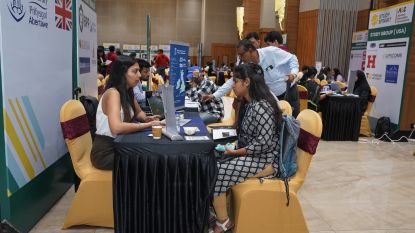
Students across Pune's engineering, IT, and commerce hubs must secure standardized test results well in advance of Australian intake cycles. Utilizing specialized university and visa interview preparation resources equips candidates to satisfy both university departmental admissions boards and home affairs integrity teams.
Changes to the Temporary Graduate Visa reduce post-study work authorization lengths to two years for standard Master's graduates and three years for doctoral completers, while lowering the maximum applicant age limit to 35. These adjustments focus post-study opportunities directly on sectors facing acute professional shortages across regional and metropolitan Australia.
Prior immigration provisions allowed extended multi-year automatic visa extensions. The consolidated Subclass 485 framework restores standard baseline durations while incentivizing studies in designated regional hubs such as Adelaide, Perth, Wollongong, and Geelong with supplementary regional visa extensions.
Age limitations mean Indian professionals seeking postgraduate qualifications must plan their timelines methodically. Applicants aged 36 and older are generally ineligible for post-study work visas (except doctoral researchers in select technical domains), making upfront program selection critical.
Post-Study Work Rights at a glance
These regulatory changes mean Indian students must approach their Australian university applications with disciplined financial validation, competitive English proficiency, and undeniable course relevance. Strategic planning replaces speculative applications, demanding professional document collation from the earliest research stages.
Pune represents one of India's most dynamic academic ecosystems, producing thousands of engineering, computer science, and business graduates annually from institutions like Savitribai Phule Pune University and affiliated colleges. Students from neighborhoods such as Kothrud, Viman Nagar, Shivajinagar, and Wakad face distinct opportunities when planning their international transition.
Case Example: Consider Aniket, a software engineering graduate from Pune with two years of cloud infrastructure experience. When applying for a Master of Information Technology at an Australian university in Melbourne, his GS submission must detail why domestic Indian master's programs fail to provide the enterprise cloud architectural credentials he needs. By validating his parents' commercial bank savings alongside an approved education loan, Aniket achieves clear financial compliance without evidentiary ambiguity.
To maximize application success, follow this sequential roadmap:
Ready to navigate your Subclass 500 visa application with expert precision? Explore the expert study abroad services for Indian students at Study Smart to access personalized profile evaluations, certified documentation audits, and dedicated admissions mentorship.
Indian students holding a valid Subclass 500 visa can work up to 48 hours per fortnight during active semester periods, with unrestricted hours permitted during scheduled institutional vacations. Maintaining satisfactory academic attendance and passing grades remains a mandatory visa compliance condition.
Processing timelines for Australian Subclass 500 visas typically range from 4 to 8 weeks depending on the assessment level of the chosen education provider and the completeness of financial documentation. Submitting fully audited evidentiary files through experienced education advisors prevents delays linked to verification requests.
Incomplete Genuine Student responses or vague academic justifications can result in immediate visa refusal by the Department of Home Affairs without requests for additional documentation. Working alongside qualified visa documentation specialists ensures all statement prompts address official migration criteria thoroughly.


































-1750416362-1750417414.jpg)

-1790399182.png)




-1790830806.png)

-1789647708.png)
-1789648196.png)
 (1)-1787123243.png)



















-1749620108.png)






















-1789648364.png)
-1789648032.png)
-1789647864.png)

-1789648649.png)




-1790228836.png)