-1751978393.webp)

Many Indian families planning a 2027 intake want to know one thing first: can we fund this degree without pledging our home? An education loan without collateral for study abroad is possible for many students, but approval depends on the loan amount, the university, the course and the co-applicant's income. This guide explains who usually qualifies, what lenders look at and what to do when the cost goes above the collateral-free limit.
At a glance
Students usually qualify for an education loan without collateral for study abroad when the loan amount is within the lender's unsecured limit, they hold a confirmed admission from a recognised university, and a parent or close family member can join as a co-applicant with steady, documented income. A good academic record and a career-focused course make approval more likely.
In practice, lenders want to see that the loan can be repaid even though no property backs it. The government guarantee helps banks lend small amounts without collateral, so many banks are more willing to lend amounts up to ₹7.5 lakh without collateral.
For larger amounts, the student's profile becomes the "security". A master's in a field with strong hiring at a well-ranked university abroad is seen as lower risk than a lesser-known course at an unranked college. Study Smart's education loan page notes that some banks offer unsecured loans above the standard limit based on university rankings and career prospects (Study Smart, 2026).
A secured loan is backed by collateral, such as a house, flat or fixed deposit, which the bank can claim if the loan is not repaid. An unsecured education loan for abroad studies has no such asset behind it. Instead, the lender relies on the student's profile, the university and the co-applicant's income.
Collateral simply means an asset you pledge to the lender. Because the lender takes more risk on unsecured loans, these loans often have lower limits and can carry higher interest rates. Secured loans usually allow bigger amounts and may come with better terms.
At a glance
Interest rates, processing fees and limits change often, so compare the current sanction terms from each lender rather than relying on figures from older articles.
Yes, as of late 2026 the ₹7.5 lakh limit still applies under the Credit Guarantee Fund Scheme for Education Loans. The government recently expanded the scheme to scheduled cooperative banks, but the maximum covered amount stayed at ₹7.5 lakh, according to a September 2026 report.
"Loans covered under the scheme do not require collateral security or a third-party guarantee." (Careers360, 2026)
The same report notes that Scheduled State Cooperative Banks and Scheduled Urban Cooperative Banks can now join as lending institutions if they meet the required conditions (Careers360, 2026). For families, this means more banks may be able to offer small collateral-free loans in 2027.
The ₹7.5 lakh figure is a scheme limit, not a promise. Each bank still runs its own credit checks, and a bank can decline or reduce a loan even when the amount is within the limit. Always confirm the current limit with the bank before you apply.
Lenders mainly check four things: the course you will study, the university and its ranking, your co-applicant's income (including their credit history) and your own academic record. Credit history is listed separately below because it often affects how much a bank will lend. Together, these tell the bank how likely you are to finish the degree, find work and repay the loan on time.
Here is how each factor is usually judged:
Choosing the right university and course early makes a real difference to the loan. Our study abroad counselling team can help you weigh funding alongside your university choices.
It is difficult but not impossible. Most banks require a co-applicant, usually a parent or spouse, for overseas education loans. A few lenders may consider applications without one based on specific criteria, such as a very strong academic profile, an admit from a top-ranked university or the student's own work history.
Most lenders want a co-applicant because the student has no income during the course. The co-applicant shares legal responsibility for repayment, which lowers the lender's risk. Study Smart's loan FAQ confirms that most banks require a co-applicant, while some institutions may consider exceptions (Study Smart, 2026).
If your parents cannot be co-applicants, for example because of retirement or irregular income, other options may help:
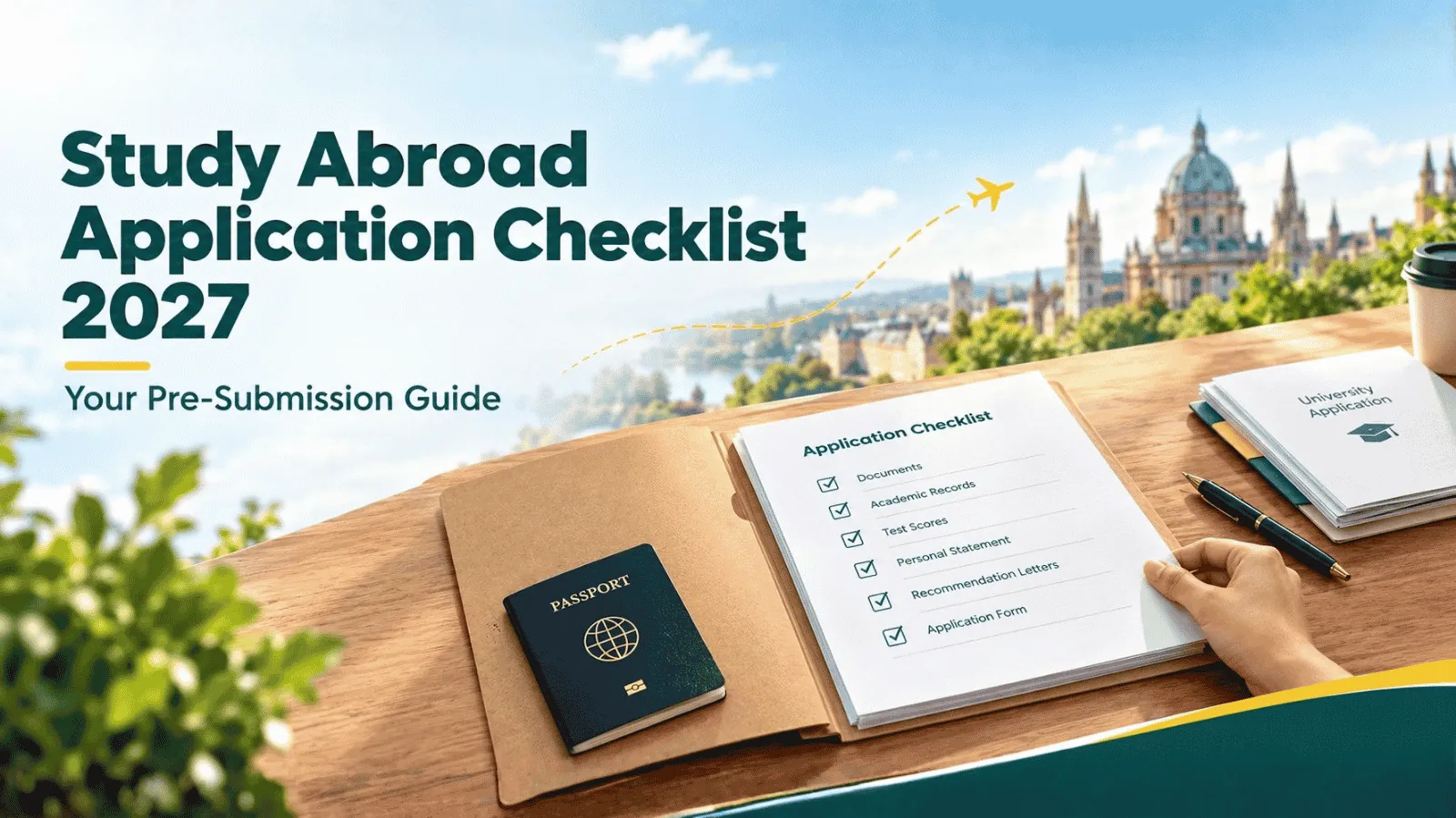
For an education loan for abroad studies, you will typically need the university admission letter, a cost estimate from the university, academic transcripts, test scores, identity and address proof, and the co-applicant's income proof and bank statements. Each lender has its own checklist, so confirm it before you start.
A practical checklist for most banks:
If you are applying for a secured loan, the bank will also ask for property papers, a valuation report and a legal check of the collateral. These steps add time, so start them early.
With complete documents, most education loan applications that Study Smart supports are processed within 15 to 30 days. The exact time depends on how complete your file is and on each bank's own procedures. Secured loans can take longer because property valuation and legal checks add extra steps.
For 2027 intakes, timing matters because universities and visa offices often ask for proof of funds. A loan sanction letter is commonly used as financial evidence, so waiting until the last week can put your visa file at risk.
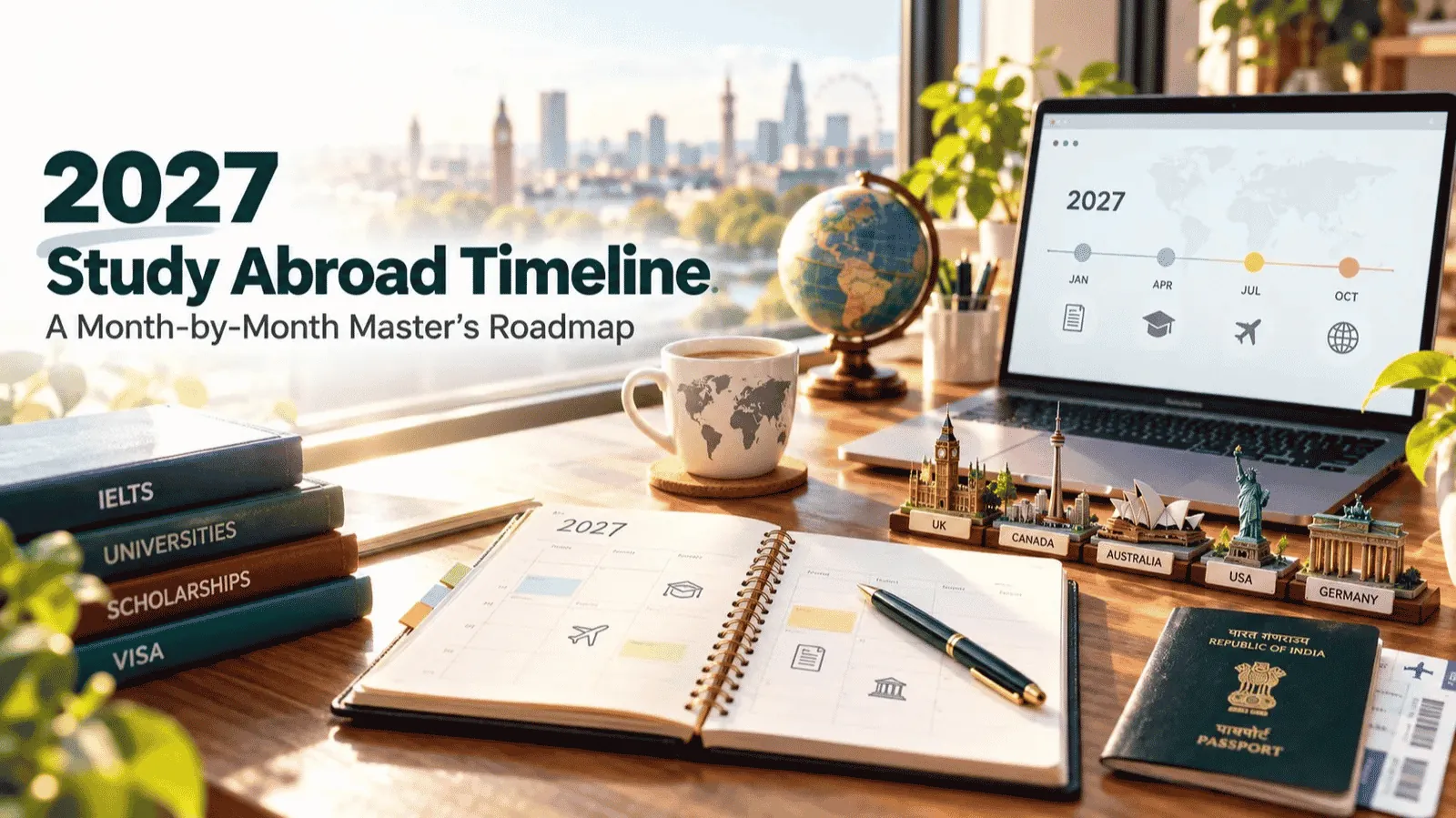
A sensible timeline for a September 2027 intake (general guidance, adjust for your country and university):
If your total cost is higher than the unsecured limit, you can pledge collateral for a larger secured loan, apply to lenders that offer bigger unsecured amounts for select universities, combine a smaller loan with scholarships and family savings, or choose a programme with a lower total cost.
Most degrees in the US, UK, Canada or Australia cost more than ₹7.5 lakh once tuition and living costs are added. Study Smart's planning notes put annual tuition anywhere from $10,000 to $60,000, plus living expenses, depending on the country and institution (Study Smart, 2026). Here are the main routes families use:
The most useful tips for study abroad funding are simple: start early, keep documents clean and borrow only what you need. Families who plan funding alongside university applications usually face fewer delays at the visa stage.
If your total funding gap is ₹7.5 lakh or less, a collateral-free bank loan with a parent as co-applicant is often the simplest route. If your gap is larger, decide early whether your family is comfortable pledging property, or whether a profile-based unsecured loan at a higher cost makes more sense.
Wherever you are in India, the practical next step is an eligibility review before your university shortlist is final. Study Smart's counsellors look at your course, target universities, co-applicant income and documents together, then suggest lenders that fit your profile. Approval always rests with the lender, so no consultant can promise a sanction, but a well-prepared file gives you the best chance of a smooth process.
Ready to check your options? Book a session with our Study Smart education loan assistance team for an eligibility review, lender shortlist and document checklist.
Under the government's credit guarantee scheme, the collateral-free limit is ₹7.5 lakh, with no third-party guarantee needed. Some lenders offer higher unsecured amounts for select universities and courses. Those limits vary by lender and change often, so confirm them directly with the bank.
Yes, many banks accept self-employed parents as co-applicants. They usually need income tax returns, business proof and bank statements instead of salary slips. Clear, consistent records make approval easier.
Often, yes. Many lenders keep lists of approved universities, and a higher-ranked institution can qualify for larger unsecured amounts. Approval still depends on your full profile and the co-applicant's finances.
Start gathering documents in early 2027 and apply as soon as you receive your admission letter. Most applications take 15 to 30 days with complete documents, and you will usually need the sanction letter before your visa appointment.
No. Meeting the criteria makes you eligible to apply, but each lender makes its own final decision after credit and document checks. Preparing a complete file and choosing suitable lenders improves your chances.











-1791613809.jpg)









































-1750416362-1750417414.jpg)












-1789647708.png)
-1789648196.png)
 (1)-1787123243.png)



















-1749620108.png)













 (6)-1792571238.png)




-1790399182.png)


-1790830806.png)
-1789648364.png)
-1789648032.png)
-1789647864.png)

-1789648649.png)



-1790228836.png)