-1751978393.webp)
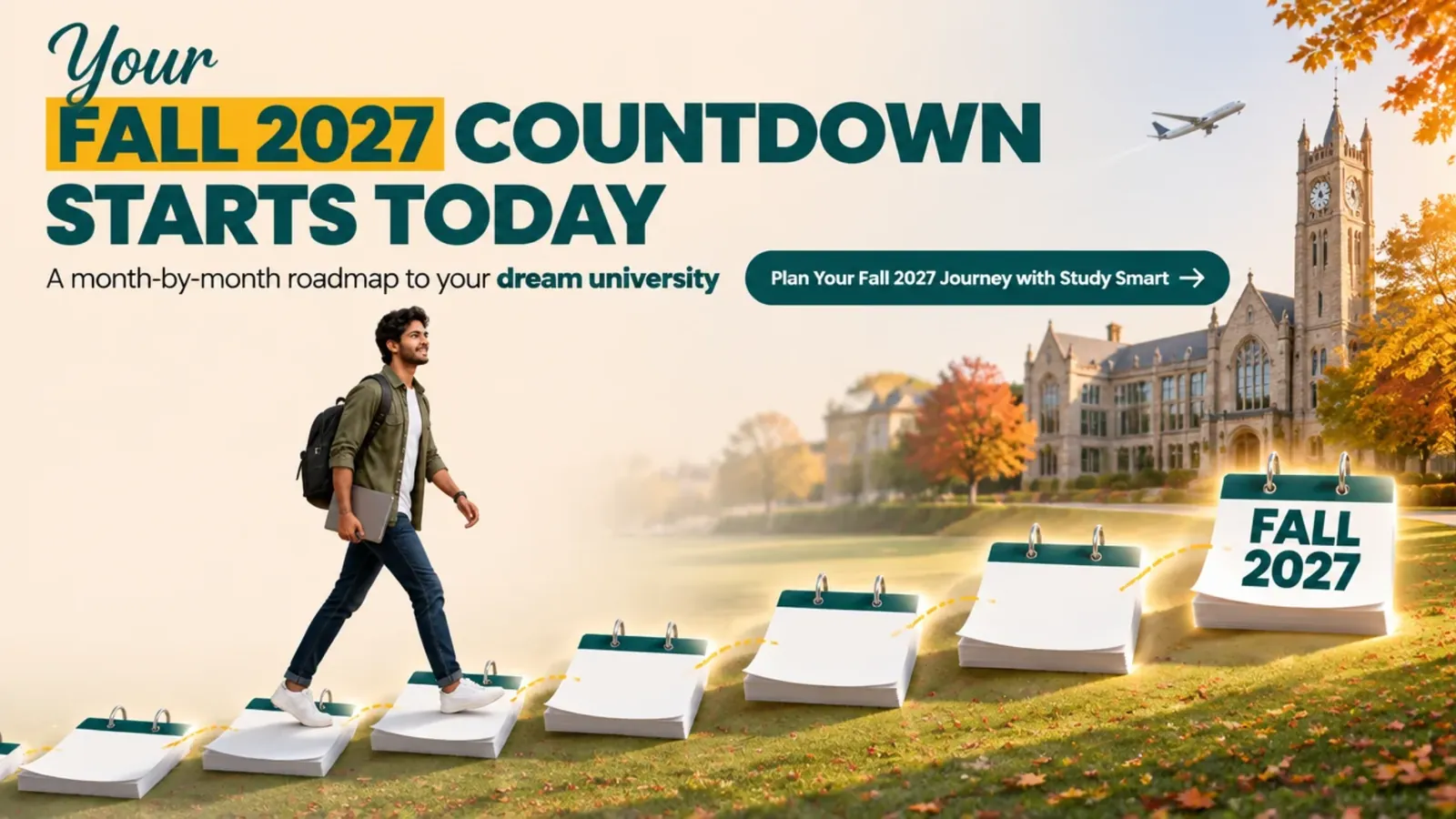
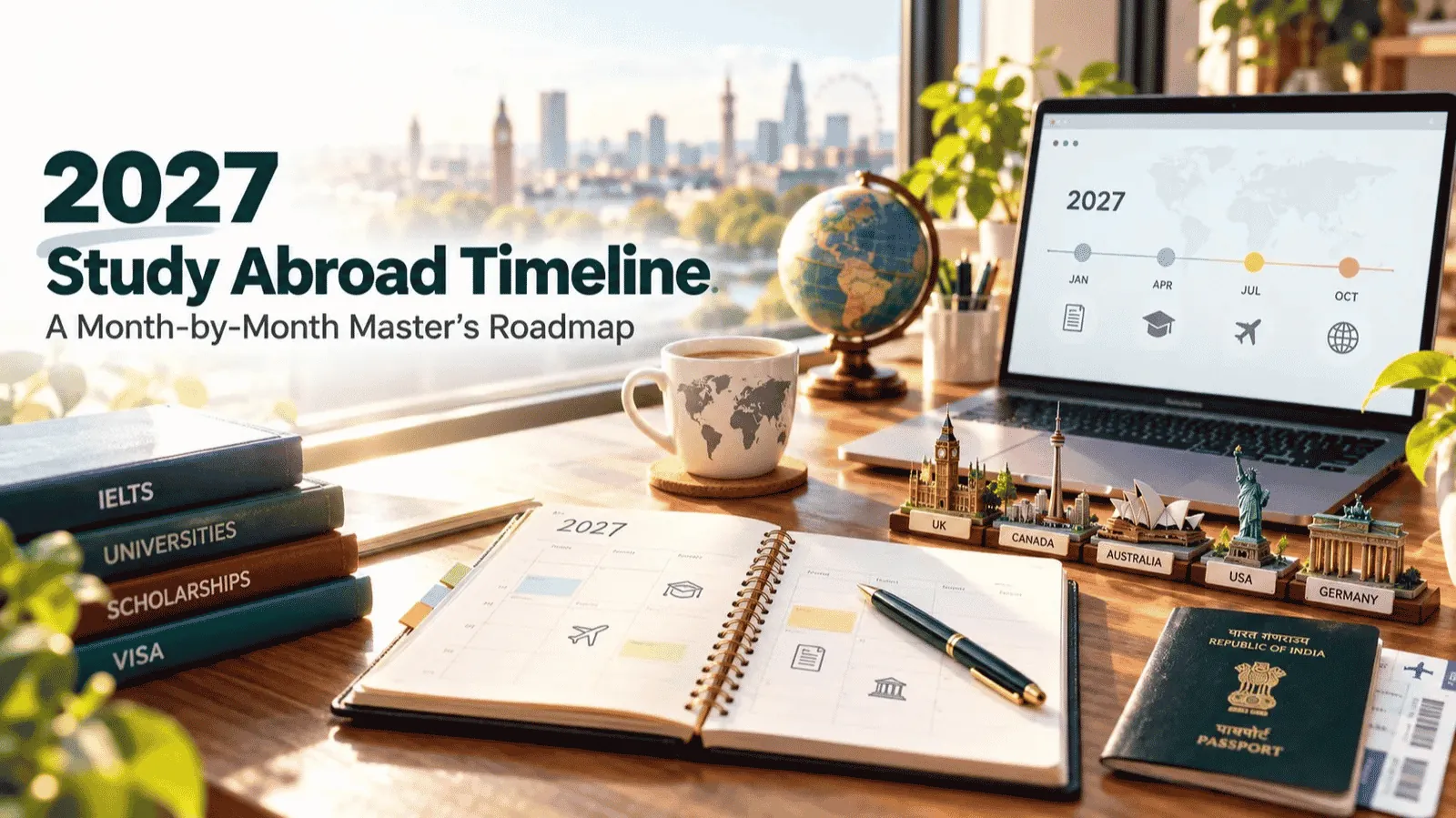
It is November 2026, and most Fall 2027 courses start in about nine to ten months. That sounds like plenty of time, but it isn't. Test dates, application rounds, scholarship windows and visa slots all overlap, and missing one of them can push your plans back a full year. This Fall 2027 intake timeline shows what to do each month, from today until you board your flight.
At a glance
The Fall 2027 intake timeline has four overlapping phases. Tests and shortlisting come first (November to December 2026). Applications and scholarships follow (December 2026 to March 2027). Next come offers, deposits and loans (March to May 2027). Visas, accommodation and departure finish it off (April to August 2027).
Because the phases overlap, many families feel overwhelmed. You might be writing your Statement of Purpose (SOP) while sitting IELTS and chasing professors for recommendation letters, all in the same month. An SOP is the essay that explains why you want the course and how it fits your career. The plan below spreads that work out so no single month turns into a crisis.
Competition from India is also high, which is why early, well-prepared applications stand out.
India sent more students to the United States than any other country in 2024/25, with 363,019 students (IIE Open Doors, 2025).
Yes, but you have no spare time. Study Smart counsellors usually advise starting 12 to 18 months before the course begins, and November 2026 is closer to nine months out. To make first-round deadlines, you need to take your English test, finish your shortlist and draft your SOP before January 2027.
The students who struggle are usually the ones who wait for a "perfect" test score before they start shortlisting. Do both at the same time. If you want a master's in the US, check whether your programs ask for the GRE or GMAT, because booking a test and reaching a strong score can take several weeks.
A late start is also why the order of tasks matters. Some tasks, like getting transcripts from an Indian university, depend on other offices and can't be rushed. Start those first, then spend your own time on tests and essays.
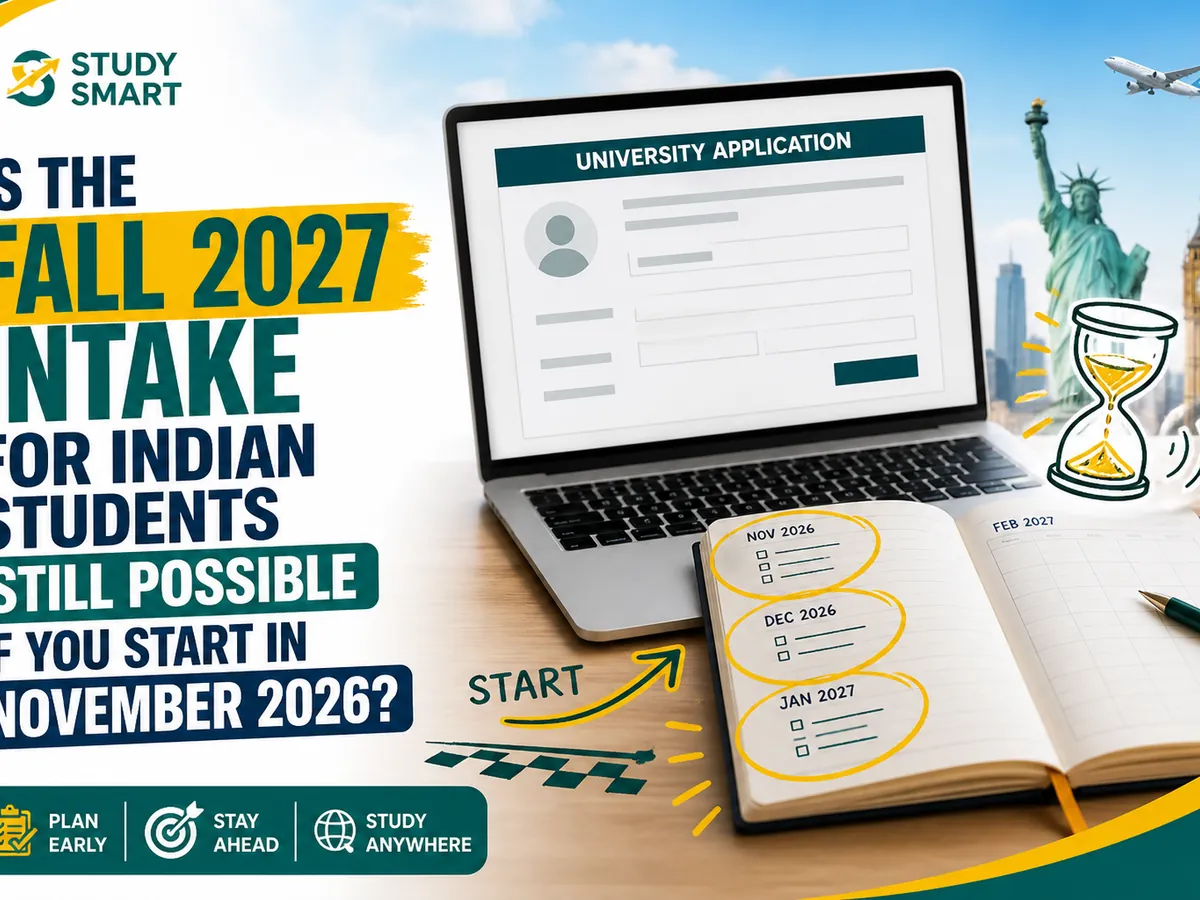
Use November and December 2026 to lock in your English test, build a shortlist of 6 to 10 universities and write your first SOP draft. These two months decide whether you make first-round and priority deadlines, which often carry the best scholarship chances.
If you are unsure how each application portal works, our guide on how to apply to foreign universities as an Indian student walks through the process step by step.
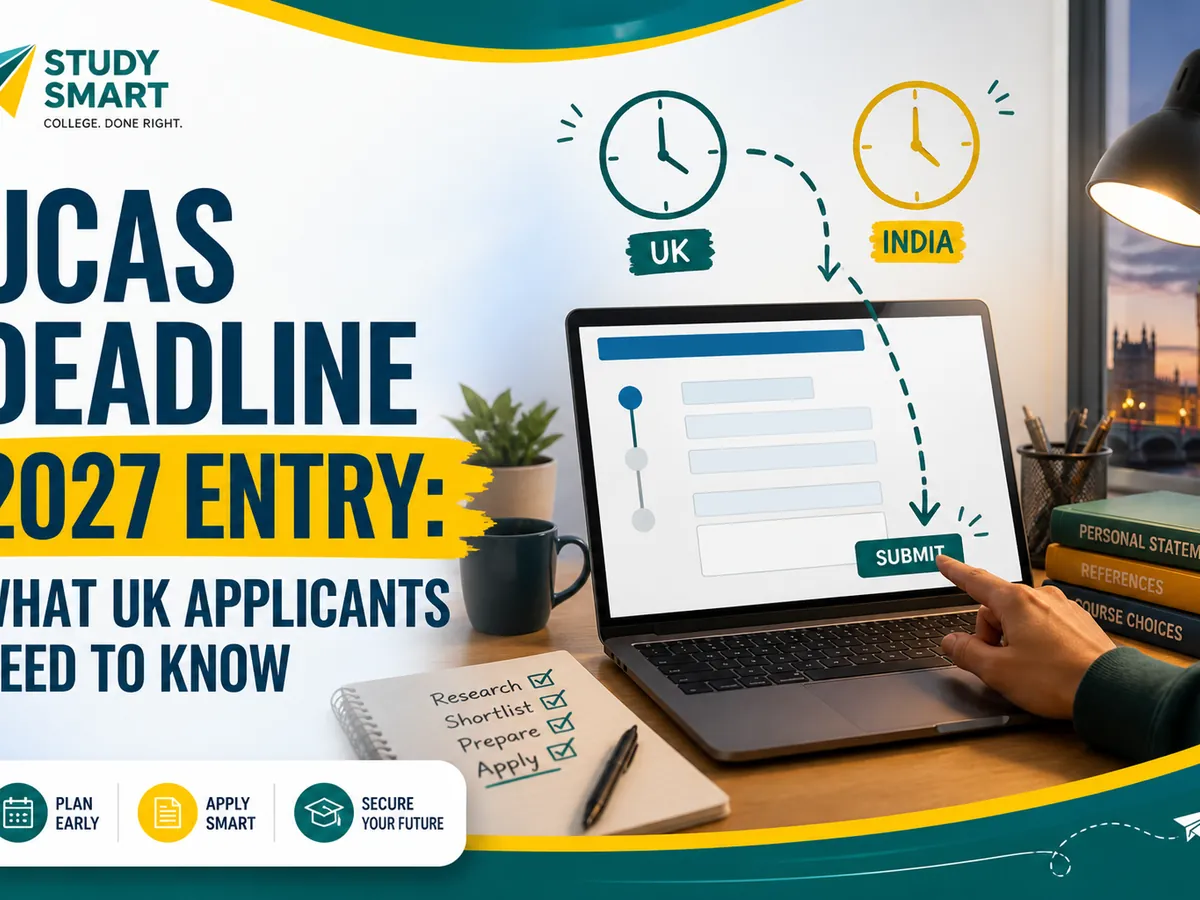
The UCAS deadline for 2027 entry is 13 January 2027 at 18:00 UK time for most undergraduate courses. Courses with an earlier 15 October deadline, such as most medicine, dentistry and veterinary courses and Oxford or Cambridge, are excluded. Applications received by 13 January must be considered equally (UCAS, 2026).
Universities do not have to look at applications that arrive after 13 January. They may still consider them if places remain, but popular courses often fill up. For an Indian student, 18:00 UK time on 13 January is 11:30 pm IST, so don't leave it to the last evening.
Postgraduate (master's) applicants in the UK usually apply straight to each university rather than through UCAS. Many UK master's courses use rolling admissions, which means they review applications as they arrive and can close once full. Applying between December and February is safer than waiting until spring.
January to March 2027 is the main application and scholarship season. Submit your remaining applications, apply for university and external scholarships, and complete any admission interviews. Parents should also start education loan and proof of funds paperwork during these months.
Fall 2027 intake deadlines vary a lot by country. The UK has a fixed UCAS date for undergraduates. The US, Canada and Germany set dates by university and program, and Australia mostly runs its own intake calendar. The list below shows general patterns from our counselling work. Always confirm the exact date on each university's official page.
At a glance
Start your student visa as soon as you accept an offer and pay any deposit, usually between April and June 2027. For the US, an F-1 visa can be issued up to 365 days before your course start date. New students can arrive up to 30 days before the start date on their Form I-20 (Study in the States, DHS, 2026).
The Form I-20 is the document a US university issues once you have been admitted and shown proof of funds. You need it to pay the SEVIS fee and book your visa interview. UK students receive a CAS (Confirmation of Acceptance for Studies) from their university before applying for a Student visa. Canada and Australia have their own acceptance documents too.
Study Smart runs mock sessions through our university and visa interview preparation service, so you can practise honest, confident answers before the real interview.
July and August 2027 are for travel and settling in. Book accommodation and flights, sort out forex and insurance, and attend pre-departure briefings. For the US, plan to land within 30 days of your program start date, not earlier.
Here is an illustrative example (not a real client) showing how the months fit together. Riya is a final-year B.Tech student in Kothrud, Pune. She wants an MS in Computer Science in the US, with a UK master's as a backup.
Riya's plan works because she starts slow tasks like transcripts early and runs tests, shortlisting and documents side by side.
If you are aiming for Fall 2027, the next eight weeks matter more than the next eight months. Book your English test this week, build a balanced shortlist and have your first SOP draft finished before December ends. Parents can help most by sorting out funding early, because loan and bank paperwork often slows families down.
Students in Pune and Delhi NCR can meet a counsellor in person for a profile review, IELTS coaching and an application plan built around these dates. Study Smart supports you from IELTS and shortlisting through SOPs, visas and pre-departure, so one team keeps track of every deadline. Book a free counselling session with Study Smart to map your personal Fall 2027 plan.
Ideally, start 12 to 18 months before your course begins, which means roughly spring to early autumn 2026. If you are starting now, in November 2026, focus first on your English test, shortlist and SOP so you can still make first-round deadlines in December and January.
For most UK undergraduate courses, the deadline is 18:00 UK time on 13 January 2027. Some courses, such as most medicine courses and Oxford or Cambridge, had an earlier 15 October deadline. UK master's courses usually take direct applications instead.
An F-1 visa can be issued up to 365 days before your course start date, according to the US Department of Homeland Security. You need your Form I-20 first, and new students can enter the US no earlier than 30 days before the start date on their I-20.
IELTS proves your English level, and most universities in the UK, Canada, Australia and many in the US accept it. The GRE or GMAT is a separate test some US graduate programs still ask for. Check each program page, because many have made these tests optional.
Some scholarships stay open into spring, but many university funding rounds close with the first or priority application deadline. Applying in December or January gives you the best chance at merit awards.

















































-1750416362-1750417414.jpg)






 (6)-1792571238.png)





-1789647708.png)
-1789648196.png)
 (1)-1787123243.png)




















-1749620108.png)

















-1791613809.jpg)

-1790399182.png)




-1790830806.png)
-1789648364.png)
-1789648032.png)
-1789647864.png)

-1789648649.png)




-1790228836.png)