-1751978393.webp)

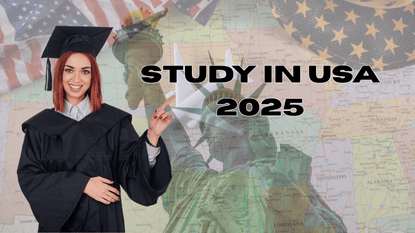
Pune sends thousands of students to American universities every year, yet most first-time applicants underestimate how many moving parts the process involves. If you want to study in USA, you need a plan that covers exams, applications, finances, and the visa in the right order. This checklist breaks the journey into clear steps so students from Pune can move from dream to departure gate without missing a deadline, a document, or a payment.
At a glance
The United States hosts the world's largest international student population, and India recently became its biggest source country. Students choose to study in USA for flexible curricula, research funding, strong post-study work options through OPT, and the global recognition of American degrees.
Pune has a natural connection to this trend. The city is home to major engineering, IT, and management institutions, and its graduates feed directly into American master's programs in computer science, data analytics, mechanical engineering, and business. Many Pune families also have relatives or alumni networks in cities like New Jersey, Dallas, and the Bay Area, which softens the transition.
The numbers confirm the momentum. India sent about 331,602 students to the United States in the 2023/24 academic year, overtaking China as the top sender (IIE Open Doors Report, 2024). For a Pune student, this means larger Indian communities on campus, more alumni to learn from, and stronger competition for the same seats.
"India became the leading place of origin for international students in the United States in 2023/24, with enrolment crossing 330,000 students." (IIE Open Doors Report, 2024)
Begin 12 to 18 months before your intended intake. Fall intake applications typically close between December and March of the previous year, so a Fall 2026 aspirant should have test scores ready by October 2025 and applications submitted by January 2026.
Here is a simple timeline that works for most Pune applicants:
If you are still deciding whether America is the right fit, Study Smart's guide on choosing the best country to study abroad for Indian students compares the USA against the UK, Canada, and other destinations on cost, jobs, and visa rules.

You need an English proficiency test, usually IELTS or TOEFL, and often a GRE or GMAT for postgraduate admission. Most US universities ask for IELTS 6.0 to 6.5 at the undergraduate level and 6.5 to 7.0 for competitive master's programs (EducationUSA, 2024).
The exam checklist for study in USA for Indian students usually looks like this:
Book your IELTS date early, because Pune test centres fill up fast before the Fall intake rush. A certified trainer can shorten your preparation time by weeks, which matters when application deadlines are fixed.
The total study in USA cost for a two-year master's degree typically falls between INR 35 lakh and 60 lakh, covering tuition, living expenses, insurance, and travel. Public universities sit at the lower end of this range, while private universities in big cities sit at the higher end.
Tuition is the largest component. The College Board reported average published tuition of roughly USD 25,000 to 45,000 per year for international graduate students, depending on the institution type (College Board, 2024). Living costs add another USD 10,000 to 18,000 per year, with cities like New York and San Francisco far above smaller college towns (EducationUSA, 2024).
Do not forget the smaller line items that Pune families often miss. Application fees run USD 50 to 150 per university, the SEVIS fee is USD 350, the visa application fee is USD 185, and health insurance can cost USD 1,000 to 2,500 per year (US Department of State, 2024). Adding a 10 percent buffer to your budget protects you against rupee fluctuations.

Yes, and it is more common than most families assume. US universities offer merit scholarships, graduate assistantships, and tuition waivers, and external bodies add options like the Fulbright-Nehru fellowships for Indian students (USIEF, 2024).
The realistic path to study in USA with scholarship support looks like this:
A strong scholarship application starts 12 months before the intake. Counselors who track university-specific deadlines can flag awards you would otherwise miss.
Most Pune applicants target a master's degree, and the process has a predictable shape. You shortlist programs, take the required tests, submit applications with essays and recommendations, compare admits, and then move to the visa stage.
For study in USA for masters, program fit matters more than brand name. A mid-ranked university with strong industry links in your field often delivers better job outcomes than a famous name in the wrong specialization. Check curriculum, faculty research, internship access through CPT, and the OPT record of recent graduates.
STEM-designated programs deserve special attention. Graduates of STEM programs can extend their Optional Practical Training work period by 24 months beyond the standard 12 months, giving up to three years of US work experience after graduation (USCIS, 2024). For students funding their degree through loans, that work window is often what makes the return on investment work.
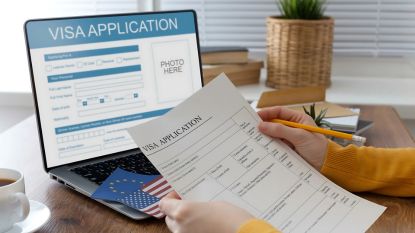
The F-1 visa is the standard student visa for full-time academic study in America. Pune students complete the process at the US Consulate General in Mumbai, which handles student visa interviews for the western India region.
The visa checklist has five steps:
Consular officers mainly test two things: that you are a genuine student, and that you can fund your education. Clear, honest answers about your course choice, your finances, and your plans after graduation carry more weight than rehearsed speeches.
The last 60 days decide how smooth your first semester feels. Confirm your housing before you fly, because on-campus rooms and good off-campus options fill quickly in university towns.
Your pre-departure checklist should cover:
If you are a student in Pune planning for a US intake, your next move depends on where you stand today. Final-year students should lock test dates this month, because scores take weeks to arrive and deadlines will not wait. First and second-year students have time to build a stronger profile through projects, internships, and early test preparation.
For parents, the practical step is financial planning. Map the full study in USA cost against savings, education loans, and realistic scholarship outcomes before applications begin, not after admits arrive. Families who plan funding early negotiate the visa stage with far less stress.
If you want a counselor to review your profile, shortlist universities, and map your deadlines, talk to the Study Smart team in Pune. Our counselors handle the full journey from IELTS preparation to the visa interview, and the first consultation is free.
Yes, for students who want flexible course structures, strong research funding, and long post-study work options. The USA hosts the largest international student population in the world, and India became its top source country in 2023/24 (IIE Open Doors Report, 2024).
You must show funds covering at least the first year of tuition and living costs as listed on your I-20 form. This typically means USD 35,000 to 60,000 in liquid funds, education loan sanction letters, or a mix of both (US Department of State, 2024).
Yes. F-1 students can work on campus up to 20 hours per week during semesters and full time during breaks (USCIS, 2024). After graduation, OPT allows 12 months of work, with a 24-month extension for STEM degrees.
No. Many universities made the GRE optional after 2020, though competitive programs in engineering, data science, and business still value a strong score. Always check the specific requirement on each program's admissions page before deciding to skip it.
Pune students attend their F-1 visa interview at the US Consulate General in Mumbai. Appointment slots fill quickly between May and July, so booking your interview three to four months before your course start date is strongly advised.






 (6)-1792571238.png)
































-1750416362-1750417414.jpg)




-1791613809.jpg)

-1789647708.png)
-1789648196.png)
 (1)-1787123243.png)
















-1749620108.png)












-1790399182.png)



-1790830806.png)
-1789648364.png)
-1789648032.png)
-1789647864.png)

-1789648649.png)


-1790228836.png)