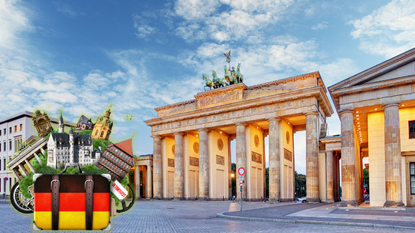
Due to the rapid industrial shift towards sustainable operations, engineering graduates are actively participating in the green energy transition. For students aiming for a career in renewable energy management, it is a great decision to study in Germany . This opportunity offers direct access to Europe’s green industries.
German college applications demand specific regulation expertise. Hence, aligning your profile with Study Smart, will make it much easier for your application.
Why study Masters in Renewable energy in Germany?
Germany is considered the legislative and technological heart of Europe's green energy infrastructure. It offers an educational environment that supports both academic theory and practical applications. It provides international students with impressive industrial advantages.
- The Energiewende Framework: Students learn directly within the framework of Germany's national energy transition policy, gaining exposure to real-time strategies and models.
- Post-Study Work Pathways: Graduate immigration policies grant international scholars an 18-month job-seeking visa upon graduation to secure full-time placement within the European Union.
- Dual Industrial Models: Programs are explicitly integrated with major research hubs and industrial conglomerates, allowing students to complete practical modules directly from the workforce.
Specializations in Msc in Renewable Energy in Germany
The overall scope for specialized engineering is expanding rapidly. There are specific cross-disciplinary paths paying significantly higher entry wages across global industries:
- Smart Grid Architecture and Virtual Power Plants: Focusing on the digitized optimization of decentralized power grids, algorithmic load balancing, and AI-driven distribution networks.
- Green Hydrogen Technologies and Power-to-X Systems: Covering the chemical engineering logic behind electrolysis, industrial fuel cell design, large-scale hydrogen storage, and synthetic fuel production.
- Wind Farm Aerodynamics and Offshore Infrastructure Engineering: Deepening expertise in structural dynamics, deep-water anchoring systems, and predictive maintenance modeling for utility-scale maritime wind arrays.
- Energy Storage Systems and Battery Materials Science: Analyzing electrochemical systems, thermal management protocols, and lifecycle engineering for utility and electric vehicle battery deployments.
Note : If your interest extends beyond energy management into automation and intelligent manufacturing, explore our guide on 'renewable energy and smart engineering programs in Germany'.
Universities with the best Renewable Energy Master Program in Europe in English
1) Study at Technical University of Munich (TUM)
TUM is considered one of Germany's elite universities of excellence. It delivers top-tier technical training primarily across its specialized Straubing and Munich campus locations.
- Course: M.Sc. in Sustainable Energy and Processes
- Eligibility: Applicants must hold a recognized Bachelor's degree in engineering or natural sciences with heavy credit allocations in process engineering, mathematics, and thermodynamics. Admission requires passing a rigorous two-stage internal aptitude assessment.
- Language Requirements: Taught entirely in English. Candidates must provide a minimum overall IELTS Academic score of 6.5.
- Tuition Fees: EUR 4,000 to 6,000 per semester for non-EU international students, with limited fee waivers available
2) Study at Technische Hochschule Köln (TH Köln)
TH Köln is highly celebrated for its deeply practical, project-oriented instructional methodology and direct ties to regional European energy providers.
- Course: M.Sc. in Renewable Energy Management
- Eligibility: A completed undergraduate degree in engineering, natural sciences, or environmental economics with a minimum German grade of 2.5 on the German grading scale. Transcripts must document at least 15 ECTS credits specifically related to energy management or green technology.
- Language Requirements: Fully English-taught. Requires a minimum IELTS Academic band score of 6.5.
- Tuition Fees: No tuition fees. Students pay only the semester contribution
3) Study at HECTOR School of Engineering and Management (KIT)
The HECTOR School is the technology business school of the Karlsruhe Institute of Technology (KIT). It offers executive-style, industry-integrated training for future energy leaders
- Course: M.Sc. in Energy Engineering and Management
- Eligibility: A recognized Bachelor's degree in engineering, natural sciences, or economics, combined with a minimum of 1–2 years of relevant professional work experience.
- Language Requirements: Fully English-taught; requires a minimum IELTS Academic score of 6.5 or TOEFL iBT of 90.
- Tuition Fees: As an executive program, it charges a total tuition fee of EUR 36,000 for the entire program, excluding a small enrollment fee of roughly EUR 180 per semester
Study Masters in Renewable energy in Germany: Cost Overview
Tuition Fees in Germany
Tuition costs in Germany depend on the federal state and the university you choose. Many public universities still charge no tuition, but a growing number now charge fees for non-EU international students, so it is important to verify this for every university on your shortlist.
Here is how the structure generally works for the 2026-27 intake:
- Tuition-free public universities: Most public universities across Germany do not charge tuition fees for international students. You only pay the semester contribution.
- Universities with non-EU tuition fees: Some federal states and individual universities charge tuition for students from outside the EU. These fees typically range from EUR 1,500 to EUR 6,000 per semester, depending on the state, university, and program. Merit and need-based fee waivers are available at select institutions.
- Semester contribution (applies everywhere): All students pay a mandatory semester contribution of around EUR 100 to EUR 400 every six months. This covers enrollment services, student union operations, and in most cases a regional public transit pass for unlimited travel on local trains and buses.
Summary: budget for tuition based on the specific university and program. Take help from an expert study abroad consultant to guide you.
Living Expenses in Germany
To secure a German student visa, international applicants must legally prove their financial self-sufficiency through a specialized blocked account.
The federally mandated blocked account amount requires students to deposit a minimum of EUR 11,904 per academic year. This translates to a guaranteed monthly allowance of approximately EUR 992 to manage basic day-to-day survival expenditures:
- Student Housing Dormitories or Shared Apartments (WG): EUR 450 to EUR 750 per month (especially higher in hubs like Munich and Berlin
- Statutory Public Health Insurance Coverage: EUR 140-145 roughly per month.
- Food, Groceries, and Household Essentials: EUR 200 to EUR 250 per month.
- Academic Books, Internet, and Leisure Activities: EUR 80 to EUR 120 per month.
Job Opportunities After Graduation in Germany
Graduates entering the European job market step directly into vital technical and managerial roles across utilities, automotive manufacturers, and governmental consulting firms:
- Renewable Energy Project Manager: Overseeing the complete developmental lifecycle of utility-scale wind or solar farms, managing multi-million Euro capital budgets, and directing regulatory zoning compliances.
- Grid Integration Specialist: Engineering the complex technical systems required to safely inject volatile solar and wind power assets into existing high-voltage electrical grids.
- Sustainable Technology Consultant: Advising multinational corporations on carbon accounting protocols, corporate energy procurement strategies, and localized clean tech transitions.
- Hydrogen Infrastructure Engineer: Designing, testing, and optimizing storage facilities, pipeline networks, and fuel cell delivery mechanisms for chemical plants and heavy transit fleets.
Conclusion
The world is moving towards renewable and sustainable energy. And courses in Germany clearly have a lot to offer to help it. This is the perfect time to reach out to an expert study abroad consultant at Study Smart, to get all the help and assistance you need to confidently turn your career aspirations into a practical reality.
Note: University eligibility criteria, tuition costs, visa regulations, and post-study work rules are subject to change. Always verify the latest updates on official university and government websites, or confirm the details with an expert study abroad consultant at Study Smart before applying.
Frequently Asked Questions (FAQs)
1. Can I apply for a Master's in Renewable Energy in Germany if my Bachelor's degree is in a different engineering field?
Yes, but with strict conditions. Your undergraduate transcripts must demonstrate sufficient foundational credits in mathematics, physics, and basic engineering mechanics. Meaning mechanical, electrical, and chemical engineering graduates can transition into this program easily.
2. Is it absolutely mandatory to speak fluent German to study these programs?
If you enroll in an English-taught curriculum, you do not need fluent German to clear university admissions. However, learning conversational German up to a CEFR B1 level is highly recommended for future prospects.
3. What are the entry requirements for a Master's in Renewable Energy Management in Germany?
To meet the requirements for a Master's in Renewable Energy Management in Germany, you need a recognized technical Bachelor's degree with a minimum German grade of 2.5 (around 70%). Additionally, international applicants must provide a valid IELTS Academic score of at least 6.5 alongside a mandatory APS certification from the German Embassy.
4. What is the mandatory APS certificate and when must I apply for it?
The APS certificate is an official document that verifies the authenticity of your Indian academic records before you can finalize your plans to study abroad in Germany. Because public universities and visa offices require this mandatory verification step, you must apply for it at least 4 to 5 months before your university deadlines.
-1751978393.webp)
















-1749620108.png)
































-1750416362-1750417414.jpg)







 (1)-1787123243.png)