-1751978393.webp)

A university offer letter gets you to the starting line, but your visa file decides whether you actually board the flight. For 2027 intakes, consulates in the US, UK, Canada, Australia, and Europe are cross-checking every number in your application against university portals, bank records, and tax filings. A single mismatch can trigger a refusal that stays on your immigration record for years.
This guide breaks down exactly what a compliant student visa dossier looks like for 2027: the financial evidence thresholds by country, how to align your CAS or Form I-20 with your visa form, and the documentation errors that cause most Indian refusals.
At a glance
All figures above are revised periodically. Treat them as planning baselines and confirm the current threshold for your specific 2027 intake on the official immigration website before you freeze funds.
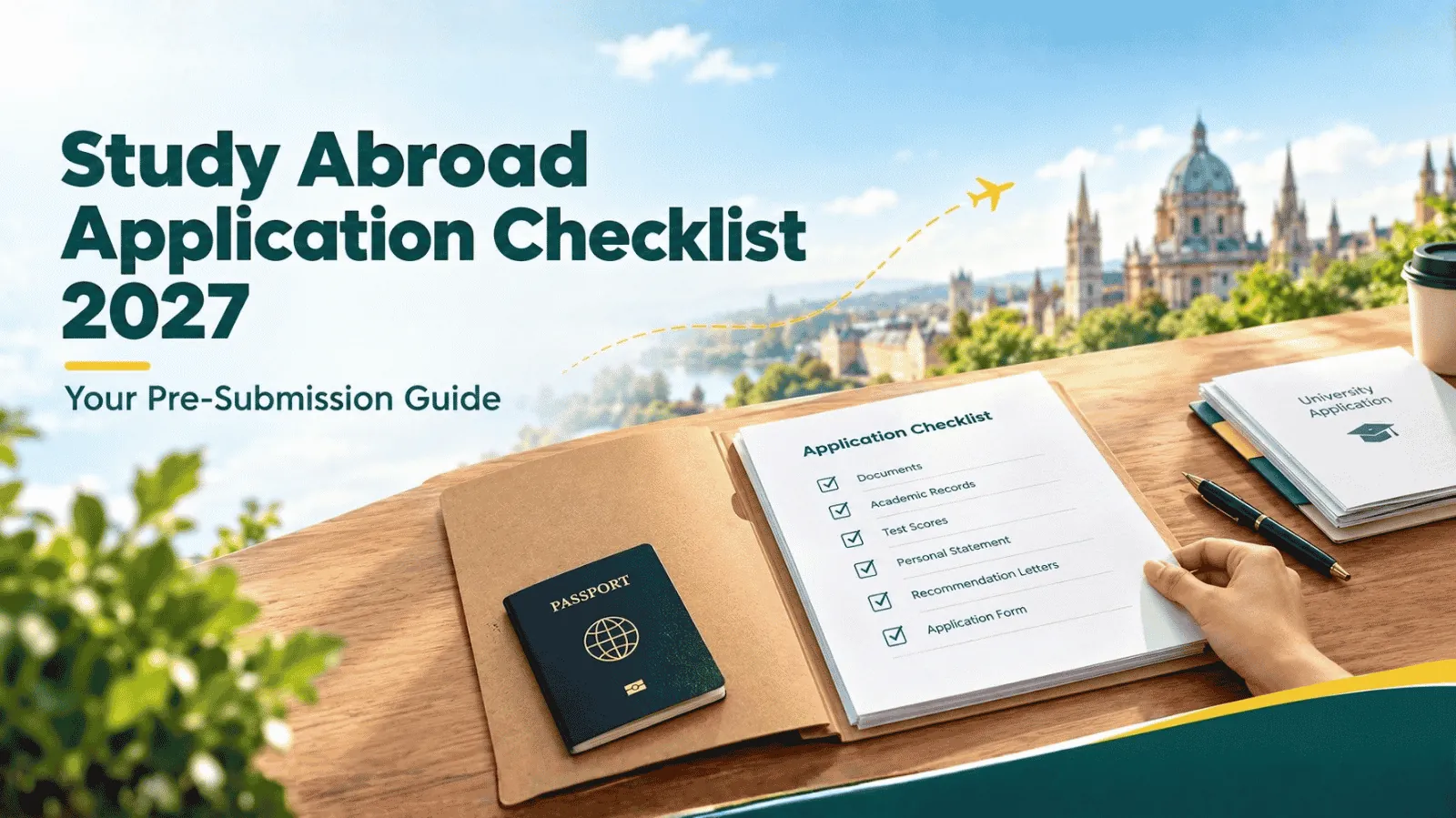
Every student visa file rests on five pillars: identity documents, academic credentials, university admission paperwork, financial evidence, and supporting legal affidavits. Missing or inconsistent documents in any one pillar can delay or sink the entire application, regardless of how strong the other four are.
Here is the working checklist used by experienced counsellors:
Working through this list with one of the best study abroad consultants in India lets you audit every document months before your visa window opens, which is when corrections are still cheap and fast.
Financial proof requirements differ sharply by country, but all of them demand one thing in common: funds that are liquid, traceable, and held long enough to prove they are genuinely yours. Borrowed money parked in an account for a few days is the fastest route to a refusal.
Here is what each major destination expects, based on the most recent official guidance:
One practical example: a Pune student heading to a Toronto college in 2025 needed a GIC of CAD 20,635, a loan sanction letter for tuition, and her father's three-year ITRs to explain the family savings. Her consultant spotted that one fixed deposit receipt was in her grandmother's name with no affidavit, and fixed it before submission. That single catch likely saved the file.
Immigration systems synchronize directly with university databases, so any conflict between what your institution registered and what you type into your visa form creates an instant compliance flag. Alignment means your anchor document and your application tell an identical story, down to the spelling of your middle name.
"You must have enough money to pay for your course and support yourself in the UK." (UK Home Office student visa guidance, gov.uk, 2025)
For the United States, confirm that your name on the SEVIS-generated Form I-20 matches your passport's machine-readable zone exactly. Check that your program code fits your academic background, and that the funds you declare on the DS-160 form meet or exceed the Section 8 estimate.
For the United Kingdom, verify that any tuition deposit you already paid is reflected on the CAS before you apply. If the CAS shows the full fee while you have already paid part of it, your maintenance calculation will be wrong, and UK Visas and Immigration (UKVI) caseworkers will not correct it for you. Also confirm whether the university assessed your English internally or expects a Secure English Language Test score, since a mismatch here causes visa-level rejections.
For Canada, most post-secondary applicants now need a Provincial Attestation Letter (PAL) or Territorial Attestation Letter (TAL) alongside the LOA, a measure introduced with the national permit cap of 437,000 approvals for 2025 (IRCC, 2025). Make sure your LOA comes from a Designated Learning Institution and that the PAL details match it.
For Australia, the eCoE code must be entered correctly in your ImmiAccount application, and your Genuine Student statement must be consistent with the course and provider named on that eCoE.
Sponsors must prove two things: that they earn enough to fund you, and that the money in the account was earned legitimately. Three consecutive years of Income Tax Returns, a notarized affidavit of support, and proof of relationship form the core of this evidence, supported by salary slips, business registration, or agricultural income records where relevant.
Follow this sequence for a clean sponsor file:
Students who prepare this layer thoroughly report far smoother interviews, because the officer's follow-up questions are already answered inside the file.
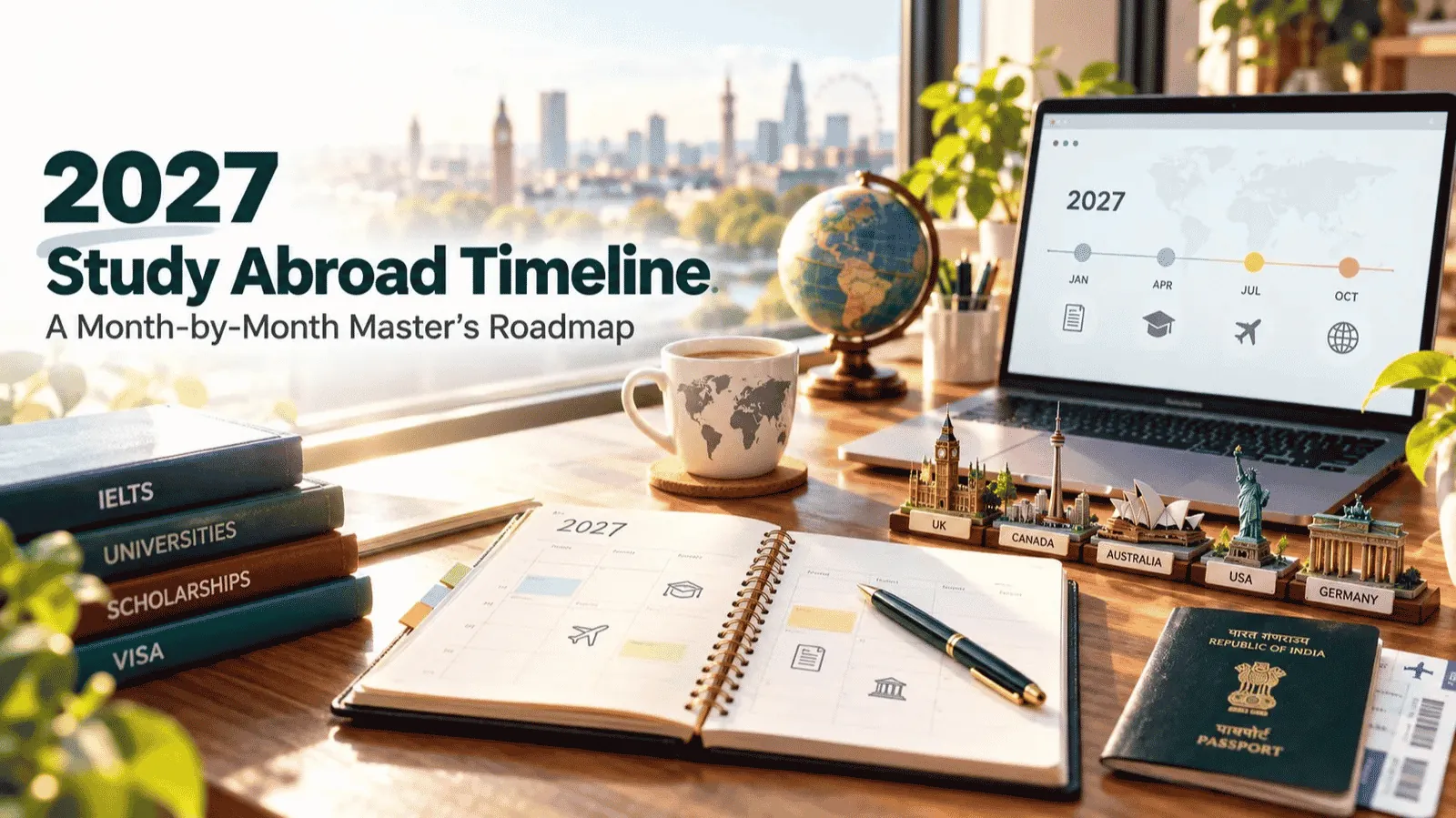
The safest timeline starts 12 to 18 months before your course begins, because financial seasoning rules and university reissue cycles move slowly. Working backwards from your intake date keeps every deadline achievable without last-minute borrowing or rushed affidavits.
A realistic month-by-month plan looks like this:
This sequence is one of the most practical tips for study abroad preparation that seniors wish they had followed, because it removes the panic window where most documentation errors happen.
Most refusals trace back to a small set of avoidable errors: unexplained funds, inconsistent personal details, outdated anchor documents, and weak statements of purpose. None of these are intelligence problems; they are process problems that a systematic review catches every time.
The recurring mistakes we see in real files include:
A careful pre-submission audit, ideally by counsellors who have handled thousands of files, converts these from refusal reasons into footnotes.
A strong consultancy does not fill forms for you; it stress-tests your file the way a visa officer would. That means a customized document checklist, line-by-line verification of statements and ITRs, mock credibility interviews, and tracking after submission, all under one roof.
When comparing study abroad consultants in Pune, look past the marketing and check verifiable signals: how long the firm has operated, whether counsellors are named with credentials on the website, and what independent reviewers say. Reading StudySmart Pune reviews on Google and other public platforms, for instance, gives you a realistic picture of how the team handles documentation-heavy cases like UK credibility interviews and Canada PAL requirements. Study Smart reports more than 14 years of experience, over 1,200 students placed in QS top-ranked universities, and a 98 percent visa success rate (Study Smart, 2025).
If you are comparing study in Canada consultants India-wide, ask specifically how the firm handled the PAL and TAL changes and the 2024 proof of funds increase, because counsellors who adapted quickly to those policy shifts will adapt quickly to whatever 2027 brings. Local presence matters too: being able to sit across a desk in Kothrud or Viman Nagar to review original documents beats mailing scans to a remote call center.
Your English test score is both an admission requirement and, for several destinations, a visa document in its own right. Booking your IELTS early, ideally 12 to 15 months before intake, leaves room for a retake without compressing your visa window.
Quality IELTS coaching in Pune or Delhi should do more than drill practice tests. Certified trainers map your target band to the specific requirement printed on your eventual CAS or offer letter, so you never face a situation where the university accepted you but the visa-level English evidence falls short. Structured programs with mock tests, writing evaluations, and band-score improvement strategies typically deliver results within a few months of consistent preparation.
If you are still shortlisting destinations, our guide on choosing the best country to study abroad for Indian students compares visa rules, costs, and post-study work rights side by side.
If you are targeting a 2027 intake, your visa documentation work starts now, not after your offer letter arrives. Open the financial trail early: consolidate savings into traceable accounts, file sponsor ITRs on time, and book your IELTS date so the score report is ready when universities ask for it.
Build a master folder, physical and digital, that mirrors the five-pillar checklist above. When your CAS, I-20, eCoE, or LOA arrives, check it against your passport the same day, and request corrections from the university immediately if anything is off. Universities take days or weeks to reissue documents, and visa appointment slots fill fast.
Finally, get a professional second pair of eyes on the complete file before submission. Study Smart's counsellors in Pune and Delhi NCR run a full documentation audit covering financial evidence, anchor document alignment, SOP review, and interview preparation. You can explore the scope of our student visa documentation services or contact our team to schedule a free consultation and have your 2027 file reviewed end to end.
Canada currently requires proof of CAD 20,635 per year for living costs, plus first-year tuition and travel expenses (IRCC, 2024). This threshold is reviewed regularly, so verify the updated figure on the IRCC website before arranging your GIC or bank statements for a 2027 intake.
The 28-day rule means your maintenance funds must sit in your account, or your sponsor's account, for 28 consecutive days without dipping below the required amount. The bank statement you submit must be dated within 31 days of your visa application (UK Home Office, 2025).
Yes, most destinations accept multiple sponsors, but each sponsor must provide their own three years of ITRs, bank statements, and a separate affidavit of support. Parents remain the strongest sponsors, and adding extended family sponsors usually requires extra documentation explaining the relationship and motivation.
The CAS (Confirmation of Acceptance for Studies) is the UK's electronic anchor document issued by your university with a unique reference number for your UKVI application. The Form I-20 is the US equivalent, generated through SEVIS, and it lists your program details and the first-year cost estimate your financial proof must cover.
In most cases, yes. Universities set an admission band, while countries like the UK also treat the score as visa-level English evidence unless the university assessed you internally and noted it on the CAS. Preparing with certified trainers through structured IELTS coaching in Pune or Delhi ensures your score satisfies both layers at once.
Sources: Immigration, Refugees and Citizenship Canada (IRCC), 2024 and 2025; UK Home Office student visa guidance, 2025; Australian Department of Home Affairs, 2024; German Federal Foreign Office, 2024; US Department of State, 2025; Study Smart, 2025.

































-1750416362-1750417414.jpg)







-1791613809.jpg)

-1789647708.png)
-1789648196.png)
 (1)-1787123243.png)


















-1749620108.png)















-1790399182.png)



-1790830806.png)
-1789648364.png)
-1789648032.png)
-1789647864.png)

-1789648649.png)



-1790228836.png)