-1751978393.webp)

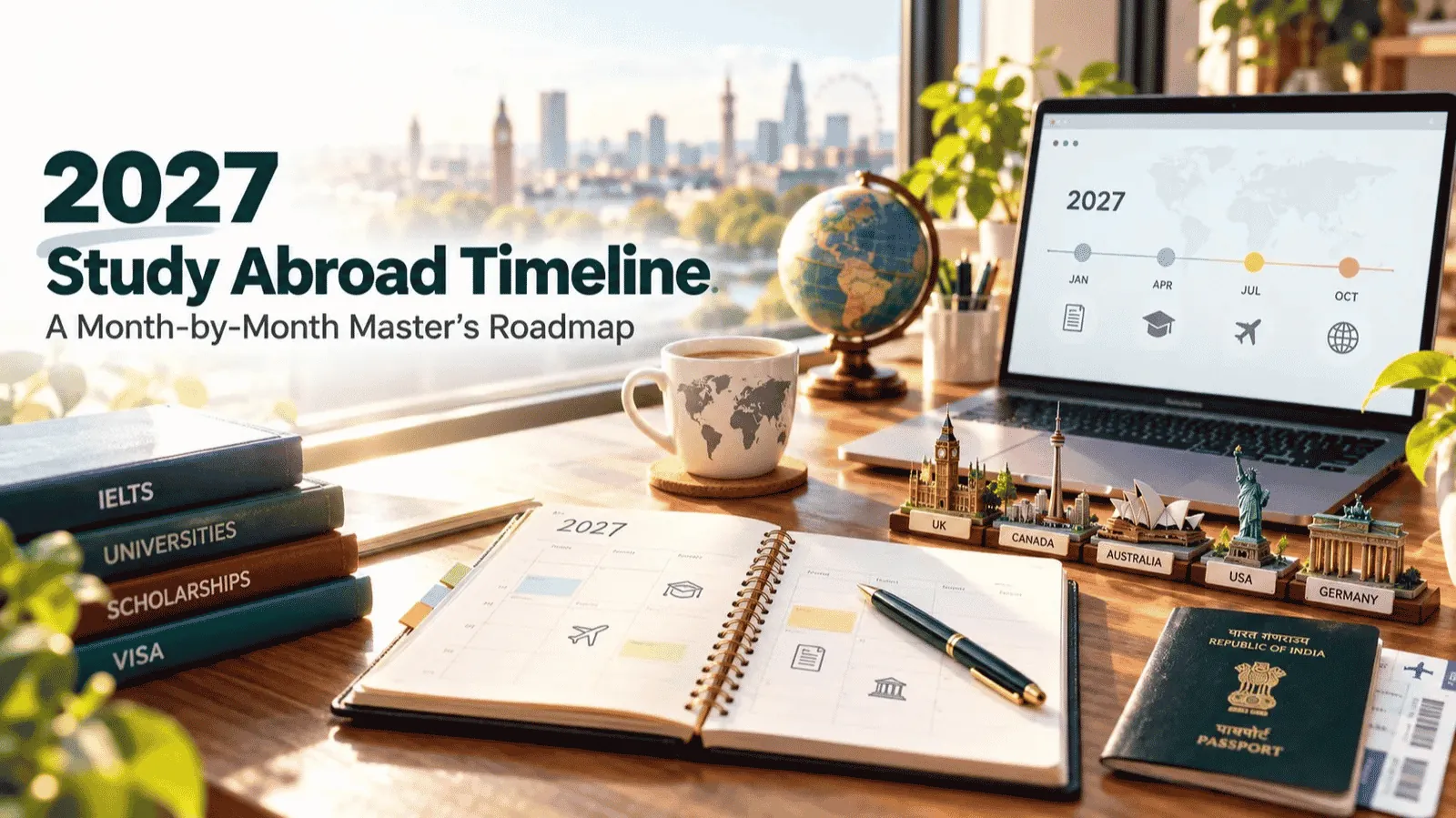
If you have missed the January 2027 intake deadline for your chosen university, you have not necessarily lost a year. You still have at least four realistic routes: a late or rolling January seat, Germany's summer semester, a mid-year intake, or a stronger application for September 2027. The right choice depends on your course, budget and how fast you can get your documents ready.
At a glance
The university will usually not review a new application for that term. However, a missed deadline does not affect your future applications. You can apply for the next intake with the same documents, often with updated test scores and a stronger statement of purpose. Some universities may also accept late applications if seats remain.
In practice, a missed deadline usually leads to one of three things. The admissions portal may close completely. The university may still review your file, but only if seats remain. Or the university may offer to move your application to the next intake, which is called a deferral (moving your start date to a later term).
For Indian students, the bigger risk is usually the visa calendar, not the university deadline itself. Even with a late offer letter, you still need time for an education loan, proof of funds, a visa appointment and travel. If that chain cannot finish before classes start, a later intake is the safer choice.
Sometimes, yes. Universities with rolling admissions review applications in the order they arrive until seats fill. Others have a final deadline that is later than the priority deadline. Your best move is to email the admissions office within a day or two, briefly explain your situation, and ask directly whether they still accept applications.
When you write to admissions, keep the email short and professional:
This works best for taught master's programmes and for less competitive courses. Highly ranked programmes and courses with fixed class sizes rarely make exceptions, so do not rely on this route alone.

Apart from a late or rolling January seat, the four strongest alternatives are Germany's summer semester (starting around April), mid-year intakes such as July 2027 in Australia, the September 2027 intake in the US, UK, Canada and Ireland, and a planned gap year spent building your profile. Each option suits a different budget, course and level of readiness.
German universities run two semesters: winter (starting around October) and summer (starting around April). Many international applicants apply through uni-assist, a central service that checks foreign certificates for German universities.
Deadlines are set by each university and course, so check every programme separately. Also check the teaching language: many summer semester master's programmes are taught in German, so English-taught options are fewer. At the University of Rostock, master's courses without local admission restrictions accept summer semester applications from 1 November to 15 January each year, while Computer Science and Electrical Engineering master's programmes close on 30 November (University of Rostock, 2026). The same page notes that Rostock does not accept summer semester applications for most undergraduate courses.
This makes Germany a strong option for master's applicants. It is weaker for students who want to start a bachelor's degree. Keep in mind that uni-assist checks, admission decisions and German national visa appointments in India can each take several weeks or months. Before you count on an April 2027 start, check current visa appointment wait times and the blocked account requirement, and apply as early as possible.
Many Australian universities and some UK universities admit students in the middle of the year as well as at the start. Course choice is usually smaller than in the main intake, and dates differ between universities. Always confirm the exact start date and application deadline on each university's own academic calendar before you plan around it.
A July start gives you about six extra months to improve test scores, arrange finances and apply for scholarships. That is often enough time to move from a backup university to a better-fit one.
For most students, the September 2027 intake (also called the fall intake) is the strongest alternative. It is the main intake in the US, UK, Canada and Ireland, so you get the widest choice of courses and the most scholarship rounds.
Canada recently changed its rules in a way that helps many postgraduate applicants. Since 1 January 2026, students in a master's or doctoral programme at a public designated learning institution (DLI, a college or university approved to host international students) do not need a provincial attestation letter (PAL) with their study permit application (Government of Canada, 2026). Most undergraduate and diploma applicants still need one, so they should apply early.
If your profile is not ready, a planned gap can be the smartest choice. Use the months to retake IELTS for a higher band, take a relevant internship or job, earn a certification, and draft a better SOP. Admissions teams generally care less about a gap than about what you did with it. Be ready to explain the gap clearly in your SOP and visa interview.
The options differ mainly in how quickly they start, how many courses are available and how much time you get to prepare. A quick comparison helps parents and students agree on a plan before they spend money on application fees.
At a glance

Usually not much. Visa rules depend on your course start date and when you apply, not on which intake you first targeted. Moving to a later intake often gives you more time to book appointments and prepare documents. The main thing to check is whether a work-visa rule changes before you finish your course.
The United States allows a long lead time for new students:
Student (F and M) visas for new students can be issued up to 365 days before the start date of a course of study, but students cannot enter the US more than 30 days before that date (U.S. Department of State, 2026).
For the UK, the earliest you can apply for a Student visa from outside the UK is six months before your course starts, and decisions usually arrive within three weeks (GOV.UK, 2026). You must also show maintenance funds of £1,529 per month for courses in London or £1,171 per month elsewhere, for up to nine months (GOV.UK, 2026). Parents should plan when these funds go into the account, because UK rules also require the money to have been held for a set period before you apply.
The UK Graduate visa is worth a close look. The Graduate visa lasts two years if you apply on or before 31 December 2026, and 18 months if you apply on or after 1 January 2027 (GOV.UK, 2026). Students starting a one-year master's in January 2027 or September 2027 will both graduate after that date. That means switching intakes does not shorten your UK post-study work time.
Consider a typical case (an illustrative example, not a real client). Riya is a computer engineering graduate from Pune with an IELTS score of 6.5. She wanted a January 2027 MS in Computer Science in the US, but her loan sanction was delayed and the priority deadlines passed.
Here is how her options could look:
In this example, a realistic plan is to apply quickly in Germany as a backup and make September 2027 the main target. Riya gets two chances to start in 2027 instead of one rushed attempt.
Act in the first month. Confirm which of your target programmes are still open, choose a main and a backup intake, and start the slow tasks (loans, test retakes and documents) at once. Students who decide quickly keep the most options open.
If you are unsure how to put together a new application, our guide on how to apply to foreign universities walks through each stage.
For students in Pune and Delhi NCR, a missed January 2027 intake is often a chance to apply with a stronger profile, not a setback. The gap gives you time to raise your IELTS band, which can open doors to better universities and to scholarships with score cut-offs.
For parents, a later intake usually means less financial pressure. You get more time to compare loan offers, arrange maintenance funds and look into funding through scholarships to study abroad. It also leaves time for a proper visa interview preparation plan instead of a last-minute rush.
The key is to choose a main intake and a backup intake now, rather than waiting for the next deadline to arrive. If you want a counsellor to review your profile and map out the best 2027 intake for your course, book a session with our study abroad counselling team.
You can try, especially at universities with rolling admissions or a later final deadline. Email the admissions office directly and ask whether late applications or a deferral are possible. If the answer is no, apply for the next intake instead.
For many Indian students, yes. September is the main intake in the US, UK, Canada and Ireland, so it offers more courses and more scholarship opportunities. It also gives you more time to improve test scores and prepare your finances.
Often yes, for master's programmes. Germany's summer semester starts around April, and some universities, such as Rostock, accept master's applications until 15 January. Undergraduate options in the summer semester are much more limited.
A gap is usually not a problem if you can explain it clearly. Spending the time on test preparation, work experience or certifications shows purpose. Mention the gap honestly in your SOP and be ready to discuss it in your visa interview.
No. Graduate visa applications made on or after 1 January 2027 get 18 months. Students starting in January 2027 or September 2027 will apply after that date, so the length is the same either way.













































-1750416362-1750417414.jpg)






 (6)-1792571238.png)





-1789647708.png)
-1789648196.png)
 (1)-1787123243.png)



















-1749620108.png)


















-1791613809.jpg)

-1790399182.png)




-1790830806.png)
-1789648364.png)
-1789648032.png)
-1789647864.png)

-1789648649.png)




-1790228836.png)