-1751978393.webp)
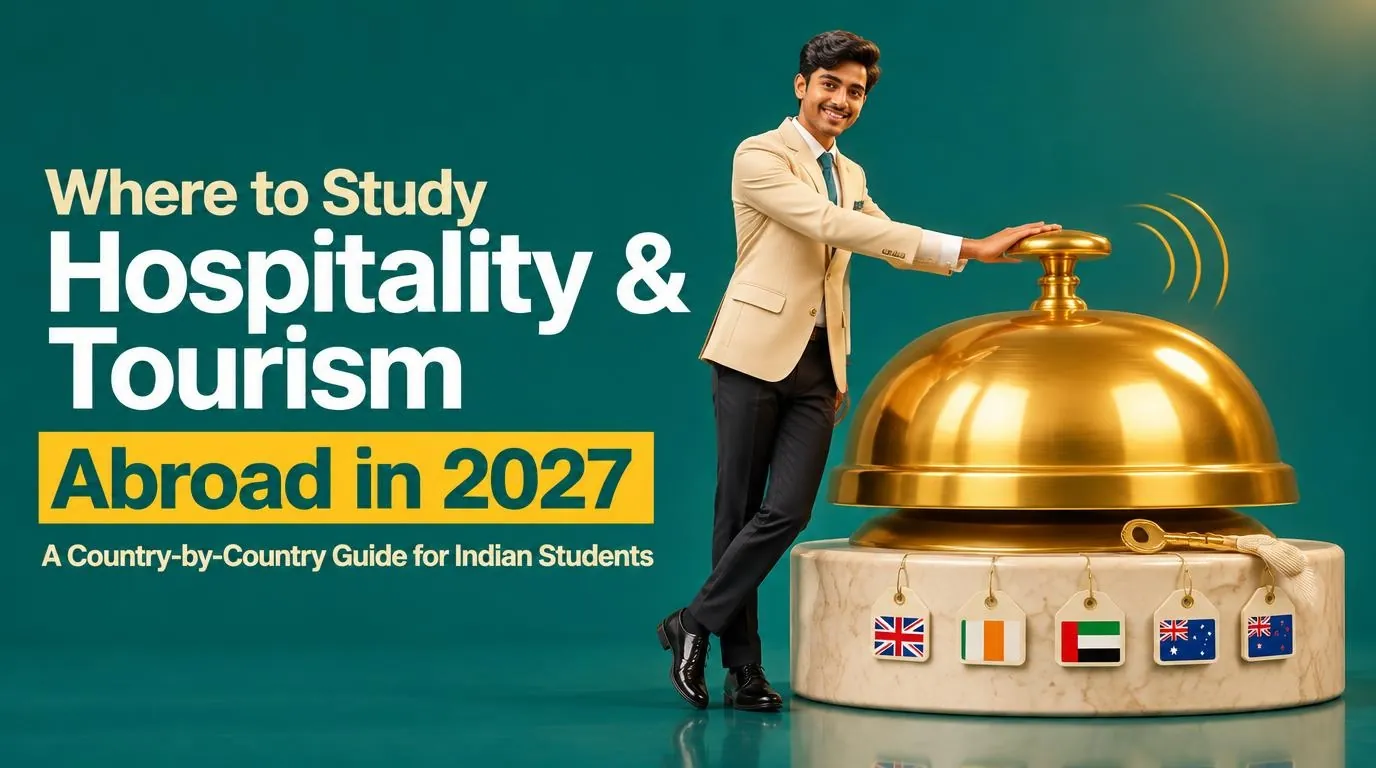
If you pick the wrong country for a hospitality degree, you can lose internships, visa time and your first job offer. For Indian students weighing up hospitality and tourism management abroad, the choice usually comes down to four places: Switzerland, the UK, Dubai and Australia. This guide compares them on rankings, post-study work rights, budget and career fit, so you and your parents can decide with confidence.
A hospitality degree from another country makes sense now because the travel industry is hiring at record levels and global hotel groups value graduates trained in international settings. Studying overseas gives you industry placements, a respected qualification and daily practice with guests and classmates from many cultures. Those three things are hard to get from a purely domestic programme.
The industry's growth is well documented. The World Travel and Tourism Council (WTTC) reports that travel and tourism added a record US$11.6 trillion to the global economy in 2025, which is 9.8% of global GDP. WTTC also found that the sector created roughly one in three new jobs worldwide that year (WTTC, 2026).
Travel and tourism supported 366 million jobs worldwide in 2025, about 10.9% of all employment (WTTC, 2026).
A modern hospitality degree covers far more than front-desk work. Most programmes teach these specialisms:
No single country is best for everyone. Switzerland suits students aiming for luxury hotels and international brands. The UK suits those who want a short, university-based master's. Dubai suits students who want real-world exposure close to India. Australia suits those who want longer post-study work rights. Start with your career goal and match the country to it.
At a glance

Swiss hotel schools combine classroom learning with structured industry internships, and global employers rate their graduates highly. In the QS 2025 subject rankings, Swiss institutions took all of the top three places in hospitality and leisure management and eight of the top ten. Switzerland is the benchmark for students who want luxury and international brand careers.
According to coverage of the QS World University Rankings by Subject 2025, Les Roches ranked second in the world and Glion ranked sixth. Glion also placed third globally for employer reputation in hospitality, and Les Roches placed fourth (Hospitality Net, 2025). Employer reputation matters because it reflects how recruiters at hotel groups view a school's graduates.
Many Swiss programmes alternate semesters on campus with internships in hotels, restaurants or corporate offices. That structure means you graduate with real work experience on your CV, which is exactly what hiring managers at five-star properties look for.
After graduation, non-EU graduates of Swiss higher education institutions can extend their residence permit for up to six months to look for a job that matches their degree. The six months run from the graduation date, and the extension cannot be renewed (ETH Zurich, 2026). Rules for private hotel schools can differ, so ask each school directly whether its graduates qualify.
Things to weigh before choosing Switzerland:
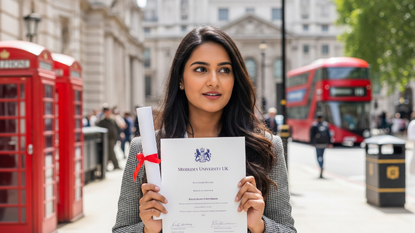
The UK is a strong choice if you want a recognised university degree in a short time. Many UK taught master's programmes run for about one year, which reduces living costs. London is also one of the world's largest hotel markets. The main change to plan for is the shorter Graduate visa from 2027.
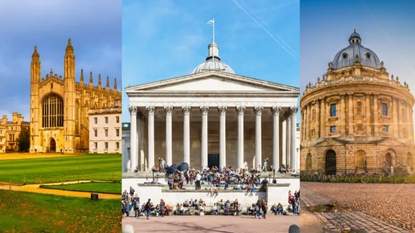
UK universities usually teach hospitality inside a business school. That means your degree often includes strategy, finance and marketing modules, which help if you want a corporate role at a hotel group's head office rather than a role inside a hotel.
The UK Graduate visa lets you stay and work after your course. Graduates who apply on or before 31 December 2026 get 2 years, while those who apply on or after 1 January 2027 get 18 months. PhD graduates get 3 years (GOV.UK, 2026).
Here is what that means in practice. If you start a one-year master's in January or September 2027, you will apply for the Graduate visa after 1 January 2027. Plan your job search around 18 months, and start networking with employers during your course, not after it.

Dubai offers hands-on exposure to one of the world's busiest hotel markets, only a short flight from India. Students can learn inside a city that runs on tourism, luxury hotels and large events. Dubai suits students who want international experience while staying close to family, though post-study work depends on finding an employer.
The scale of Dubai's hotel sector is the main attraction. Dubai's Department of Economy and Tourism (DET) reports that the city welcomed 19.59 million international overnight visitors in 2025. By the end of that year, Dubai had 154,264 hotel rooms across 827 establishments, and average hotel occupancy reached 80.7% (Dubai DET, 2026).
For students, that busy market means more chances for internships, part-time event work and industry visits. Many hospitality programmes in Dubai run at branch campuses of UK, Australian and other foreign universities, so you can often earn a foreign degree without moving to Europe or Australia.
One point needs care. Dubai does not have a broad post-study work visa like the UK or Australia. Staying on to work usually requires a job offer from an employer who sponsors your visa. Visa rules in the UAE change often, so check the current requirements with your counsellor before you apply.
Australia's Temporary Graduate visa (subclass 485) usually allows 2 years of post-study work after a bachelor's degree or a coursework master's, and 3 years after a research master's or doctorate. Most applicants must be 35 or under when they apply. That window makes Australia attractive for hospitality graduates who want longer international work experience.
The main route is the Post-Higher Education Work stream of the 485 visa (Department of Home Affairs, 2026). Vocational diploma graduates fall under a different stream with different rules, so check which one applies to your course before you enrol.
Australian hospitality courses often focus on tourism, events and resort management. Students can also gain part-time experience in cafes, restaurants and hotels during their studies, which builds a local CV before graduation.
A practical tip: check that your course is registered for international students and leads to a qualification that counts for the 485 visa. A counsellor can confirm this before you pay a deposit.
Your budget depends on three costs: tuition, living expenses and the funds you must show for your visa. Switzerland's private schools usually cost the most, a one-year UK master's saves on living costs, and Dubai reduces travel costs. Always check current fees on each school's website, because they change every year.
The total cost of hotel management abroad for Indian students also depends on how long the course runs and whether it includes paid internships. Swiss-style programmes with paid placements can offset part of your living costs, while longer bachelor's degrees in Australia add more years of rent and food.
Build your budget around these items:
Scholarships can make a real difference. Many hospitality schools offer merit-based awards for strong grades or work experience, and you can learn more in our guide on how to get scholarships to study abroad.
Most hospitality programmes ask for your academic records, an English test score such as IELTS, a statement of purpose (SOP) and proof of funds. Some schools also hold interviews to check your communication skills. Start about a year before your intake so you have time for tests, applications and visas.
Follow these steps:
The right destination for hospitality and tourism management abroad depends on where you want to be five years after graduating. Use this quick match as a starting point:
For parents, the key questions are total cost, safety and job prospects after graduation. Ask every school for its internship placement process, graduate employer list and full fee breakdown before you commit. A good counsellor will help you compare these side by side rather than pushing one country.
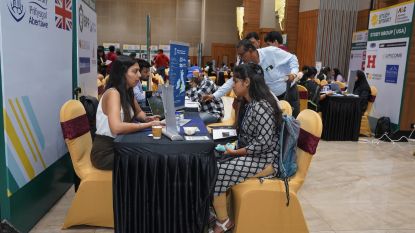
Study Smart's counsellors in Pune and Delhi NCR guide students from IELTS preparation to university shortlisting, SOP writing and visa documentation, all under one roof.
Most hospitality programmes in Switzerland, the UK, Dubai and Australia ask for an English test such as IELTS. The required band score depends on the school and the level of study. Some schools accept other proof of English, but visa officers may still ask for a test score.
The UK Graduate visa lasts 2 years if you apply on or before 31 December 2026. If you apply on or after 1 January 2027, it lasts 18 months. PhD graduates get 3 years.
Non-EU graduates of Swiss higher education institutions can extend their permit for up to six months to look for a job that matches their degree. If they find a job, they then need a regular work permit. Ask your school whether its graduates qualify for this job-search period.
Yes. The Temporary Graduate visa (subclass 485) usually allows 2 years of work after a bachelor's or coursework master's, and 3 years after a research degree. Most applicants must be 35 or under when they apply.
Ready to choose the right country and school for your hospitality career? Book a free study abroad counselling session with Study Smart and get a personalised plan from shortlist to visa.



















-1749620108.png)











-1791613809.jpg)





































-1750416362-1750417414.jpg)











-1789647708.png)
-1789648196.png)
 (1)-1787123243.png)


-1789648364.png)
-1789648032.png)
-1789647864.png)

-1789648649.png)



-1790228836.png)






 (6)-1792571238.png)




-1790399182.png)



-1790830806.png)