-1751978393.webp)
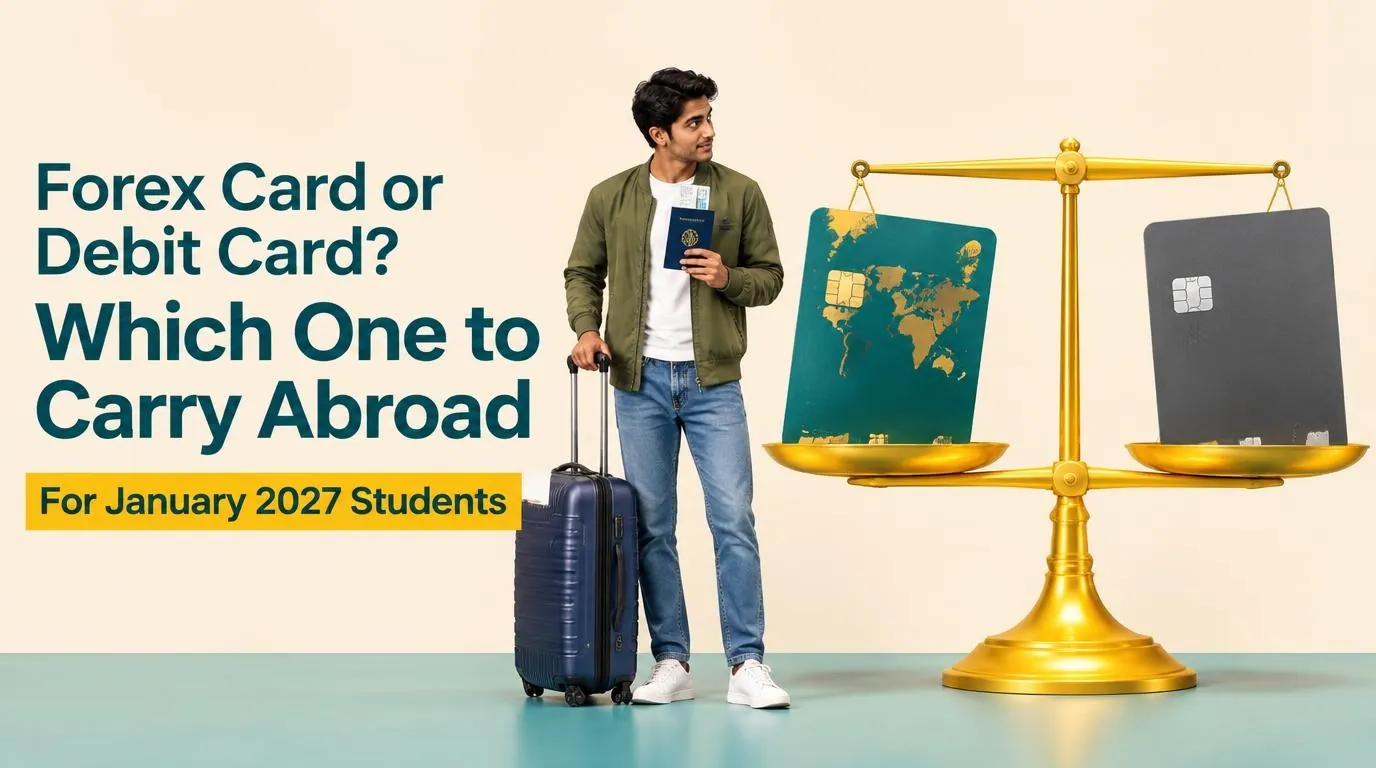
If your course starts in January 2027, you have about six weeks to decide how your money will travel with you. Picking the right forex card for students is part of that decision. Tuition, rent and your first week of groceries each work best through a different payment route, and a wrong choice can cost you in hidden markups or leave you stuck at an airport ATM.
This guide compares the three main options Indian students use, explains which charges to check, and gives you a simple plan for cash, timing and backups.
At a glance
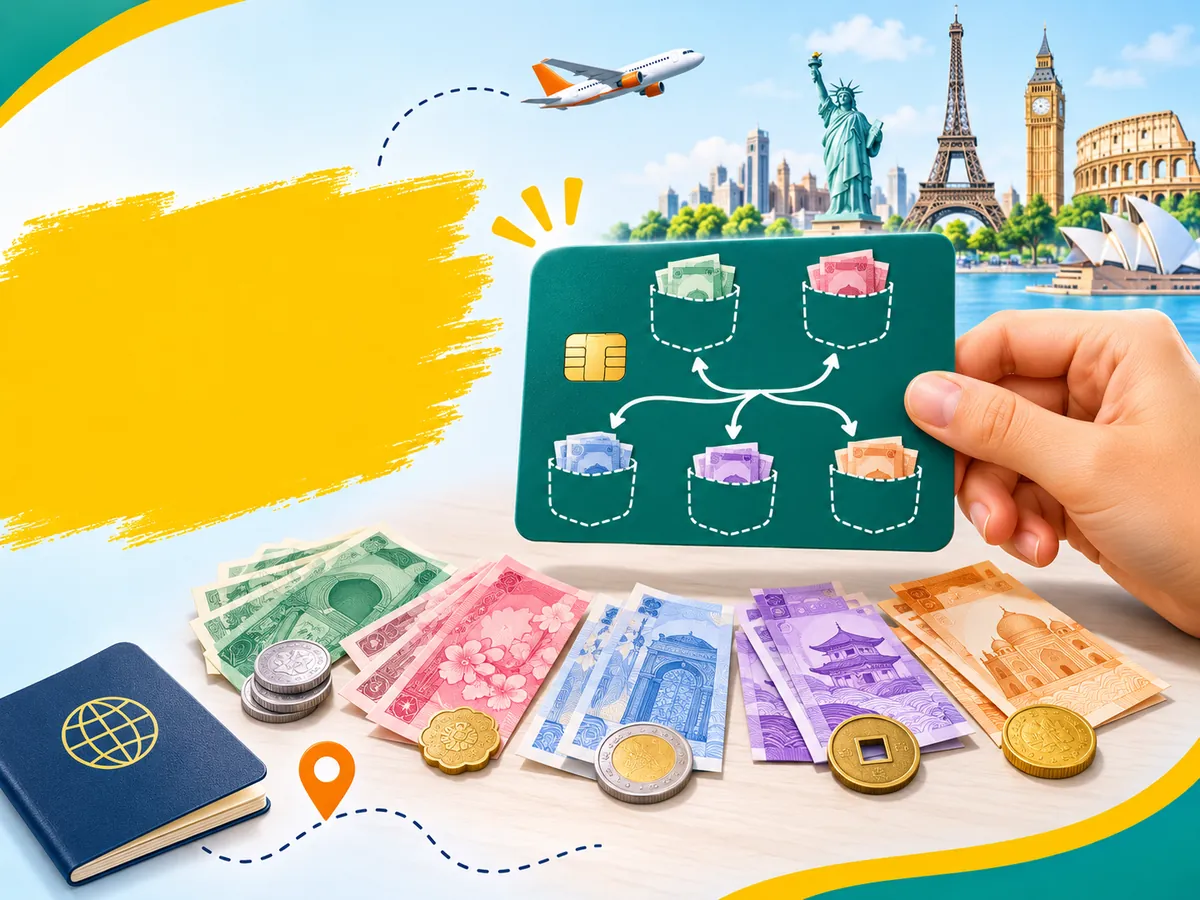
A forex card for students is a prepaid card loaded with foreign currency before you leave India. You pay in rupees, the bank converts them at the rate on the day you load, and you then spend or withdraw abroad. Because the rate is locked in at loading, later swings in the rupee do not change what you have already loaded.
Most large Indian banks and licensed forex providers issue student versions of these cards, and many students compare options such as an ICICI forex card for students with cards from other banks. The card is not linked to your savings account. If it is lost or skimmed, only the loaded balance is exposed, and you can usually block it in the issuer's app.
Is a forex card useful once you have a local bank account? It is most useful in the first one to three months, before your local account and card are active. After that, many students keep it as an emergency reserve.
Use a wire transfer for tuition, a forex card for living costs in your first months, and an international debit card as backup. Universities expect tuition by bank transfer or through their own payment portal. Cards are made for everyday spending, and splitting money this way keeps each payment on the cheapest suitable route.
Here is how the split usually works for a January intake:
All three routes count towards your yearly limit under the Liberalised Remittance Scheme (LRS), the RBI framework for sending money out of India. Under LRS, a resident individual can send up to USD 250,000 per financial year for permitted purposes, including studies abroad, and must give a PAN for these transactions (Reserve Bank of India, 2023).

Ask each provider for the full fee schedule in writing before you commit. The headline exchange rate is only one part of the cost. Loading fees, ATM charges, conversion markups, tax and intermediary bank deductions can matter just as much, especially when you add them up over a semester.
For a forex card, check:
For an international debit card, check:
For a wire transfer, check:
Yes. Many forex cards hold several currency wallets, such as USD, GBP, EUR, CAD and AUD, on one card. Load most of your money in your destination's currency. Add a second currency only if you expect to travel. Spending in an unloaded currency usually triggers a cross-currency charge.
A forex card for students going to the UK should be loaded mainly in GBP. A forex card for students going to Germany or elsewhere in the eurozone should carry EUR. Germany has a separate rule worth remembering: the blocked account you open for your visa is a different product from a forex card. Your forex card simply covers the weeks before blocked account payouts reach your German bank account.
Which forex card is best for students in the UK, or anywhere else? The best one is whichever charges you least for how you will actually use it. Compare the fee lists above line by line instead of relying on a single advertised rate.
Carry enough local cash to cover two or three days of essentials: the airport taxi or train, meals, a SIM top-up and small purchases while your cards settle in. Leave everything else on cards. Cash cannot be replaced if it is lost, and many campus cities are largely cashless.
To work out your own figure, list your first 72 hours: getting from the airport to your accommodation, three days of food, and any deposit your landlord wants in cash. Check your accommodation contract, because most landlords prefer bank transfer.
Two checks before you pack the cash:
Convert tuition as soon as you have the final invoice and your remittance documents are ready, then load the forex card in two or three parts over the coming weeks. Nobody can reliably predict currency moves. Splitting conversions spreads your risk, and an early tuition transfer avoids missed deadlines.
Timing matters more than usual for a January start. Banks abroad close for the Christmas and New Year holidays, and an international wire can take several working days to reach the university. If your fee deadline falls in early January, aim to send tuition by mid-December.
At Study Smart, we recommend starting pre-departure preparation, including forex, six to eight weeks before you fly.
For a January 2027 intake, you are already inside that window, so start this week.
Set up at least two ways to pay that do not depend on each other. That usually means a forex card plus an international debit card, kept in separate bags. Add a small cash reserve and make sure a parent can reload your card from India. When one method fails, you still have another.
Your backup checklist:
Forex card issuers usually ask for your passport, a valid student visa, your university admission letter, your PAN and an LRS declaration (Form A2). Some also ask for a flight ticket. Tuition remittances usually need your passport, PAN, Form A2, the admission or offer letter and the university's fee invoice. You normally don't need a visa to pay tuition, but check the exact list with your bank. Check your issuer's list early, because a missing document can delay your card by days.
Your visa usually comes through only a few weeks before departure, so keep a scanned folder of every document ready. That way you can apply the day your visa is stamped.
With about six weeks to go, here is a practical sequence for families in Pune, Delhi NCR and beyond:
Study Smart's study abroad essential services cover forex arrangements, international money transfers and multi-currency travel cards through partner providers. They also include SIM cards and airport pickup. Our pre-departure assistance brings forex, flights, medical checks and packing into one timeline. For a step-by-step list you can tick off, use the pre-departure checklist in our 2027 study abroad timeline.
For living costs in your first months, a forex card is usually the stronger choice. The rate is fixed when you load it, and the card is not linked to your savings account. An international debit card is still worth carrying as a backup.
Some universities accept card payments, but tuition is normally paid by wire transfer or through the university's payment portal. A bank remittance gives you a clear paper trail for visa and loan records. Always follow the payment method on your invoice.
Most issuers let you reload online through net banking or the issuer's app, and many let family members top up the card. Each reload uses the exchange rate on that day and may carry a fee. Confirm the process before you leave.
You can usually keep the balance for future use or have it converted back to rupees when you close the card. Converting the balance back to rupees may involve a fee and a different exchange rate. Ask about this before you load more than you need.
Six weeks goes quickly once visas, flights and packing are on the list. Speak with a Study Smart counsellor about pre-departure support, and we will help you plan tuition transfers, forex cards and arrival cash for your January 2027 start.

























-1749620108.png)















-1791613809.jpg)








































-1750416362-1750417414.jpg)













-1789647708.png)
-1789648196.png)
 (1)-1787123243.png)


-1789648364.png)
-1789648032.png)
-1789647864.png)

-1789648649.png)




-1790228836.png)






 (6)-1792571238.png)





-1790399182.png)




-1790830806.png)