-1751978393.webp)

Supply chain and logistics is one of the most practical careers an Indian graduate can build overseas, but the degree only pays off if you can stay and work after it. This guide compares supply chain management courses abroad in the USA, UK, Canada, Germany and Australia. It explains the post-study work rules that shape your first job and what official labour data says about demand and pay.
At a glance
Supply chain management courses abroad are university or college programs that teach how goods move from raw material to the final customer. They cover planning, sourcing, storage, transport and tracking. Many Indian students choose a one or two year master's degree, while some pick an operations-focused MBA or, in Canada, a postgraduate college diploma.
A supply chain is the full network that gets a product to you: suppliers, factories, warehouses, transport companies and retailers. Logistics is one part of that network and deals with moving and storing goods. Supply chain management is broader, because it also covers buying from suppliers, demand forecasting (predicting how much customers will order) and supplier relationships.
The main program types you will see are:
Core modules usually include operations management, procurement, inventory control, transport planning, supply chain analytics and sustainability. Many programs also teach tools such as Excel modelling, SQL and enterprise resource planning (ERP) software, which companies use to run purchasing, stock and orders in one system. Exact modules vary by university, so always read the course handbook.
The USA, UK, Canada, Germany and Australia are the strongest options for supply chain management abroad for Indian students. The right choice depends mostly on how long you can stay and work after graduating, because supply chain careers are built on early hands-on experience. Compare post-study work rules first, then tuition, living costs and rankings.
Here is how the main destinations compare on post-study work, based on official government sources:
At a glance
A practical note for students starting in 2027: if you plan a one-year UK master's, you will most likely apply for your Graduate visa after 1 January 2027. That means planning around an 18-month window rather than two years. Our guide to the best countries to study abroad for Indian students compares destinations on more factors than work rights alone.

Some US supply chain programs are STEM-designated and some are not. The answer depends on the program's CIP code, the federal code that classifies its subject. A STEM-designated degree can unlock 24 extra months of OPT, so this single detail can change your total US work window from 12 months to 36 months. After OPT, longer-term work usually needs an employer-sponsored visa such as the H-1B, so check the current rules and costs on USCIS.
Under US rules, every student can get 12 months of OPT at each education level. Students with an eligible STEM degree can apply for a further 24 months, but the employer must use E-Verify and both sides must sign Form I-983, a training plan for STEM OPT students (U.S. ICE, SEVP).
Before you accept an offer, take these steps:
Yes, in most cases, as far as field of study goes. Every PGWP applicant must also meet a language test minimum (CLB 7 for university graduates, CLB 5 for college graduates) and must have studied at a PGWP-eligible institution (IRCC, Canada.ca). Graduates of bachelor's, master's and doctoral programs are exempt from the field of study rule. College program graduates do, and logistics, materials and supply chain management (CIP 52.0203) is listed as an eligible field in the transport category (IRCC, Canada.ca).
This distinction matters because many Indian students look at one or two year postgraduate diplomas at Canadian colleges. Those programs are often more affordable and more hands-on than a university master's. IRCC also states that no eligible fields of study will be added or removed for 2026, which gives current applicants some stability.
Still, check two things before you apply. First, confirm the exact CIP code of your chosen diploma with the college. Second, check the PGWP page again close to your graduation date, since IRCC can update its list for future years.

The outlook for logistics management jobs abroad is positive in the clearest official dataset available. US government data projects strong growth for logisticians over the next decade, driven by companies that need people to plan and run complex supply networks. Other countries publish their own data, so check local sources for your destination.
US logistician employment is projected to grow 18% from 2025 to 2035, with about 26,600 openings each year (U.S. Bureau of Labor Statistics, 2025).
Fresh graduates usually start in one of these roles (based on common industry job titles, not a single official source):
Employers include manufacturers, e-commerce companies, retailers, freight forwarders, consulting firms and technology companies. Data skills tend to separate strong candidates from average ones, so pick a course with real analytics content and a live industry project.
The supply chain management salary abroad varies widely by country, city, role and experience. The most reliable public figure is from the US, where the median pay for logisticians was 82,320 US dollars a year in May 2025 (U.S. BLS, 2025). A median means half earned more and half earned less.
Keep three points in mind when you read salary figures:
When you work out return on investment (ROI), compare total course cost, including tuition, rent and living expenses, against realistic starting pay and the length of your post-study work window. Funding also changes the maths, so read our guide on how to get scholarships to study abroad.
Most supply chain master's programs accept graduates from engineering, commerce, BBA, economics and related fields. Universities usually look at your academic record, English test score, statement of purpose and recommendation letters. Some MBA programs also expect work experience and a GMAT or GRE score.
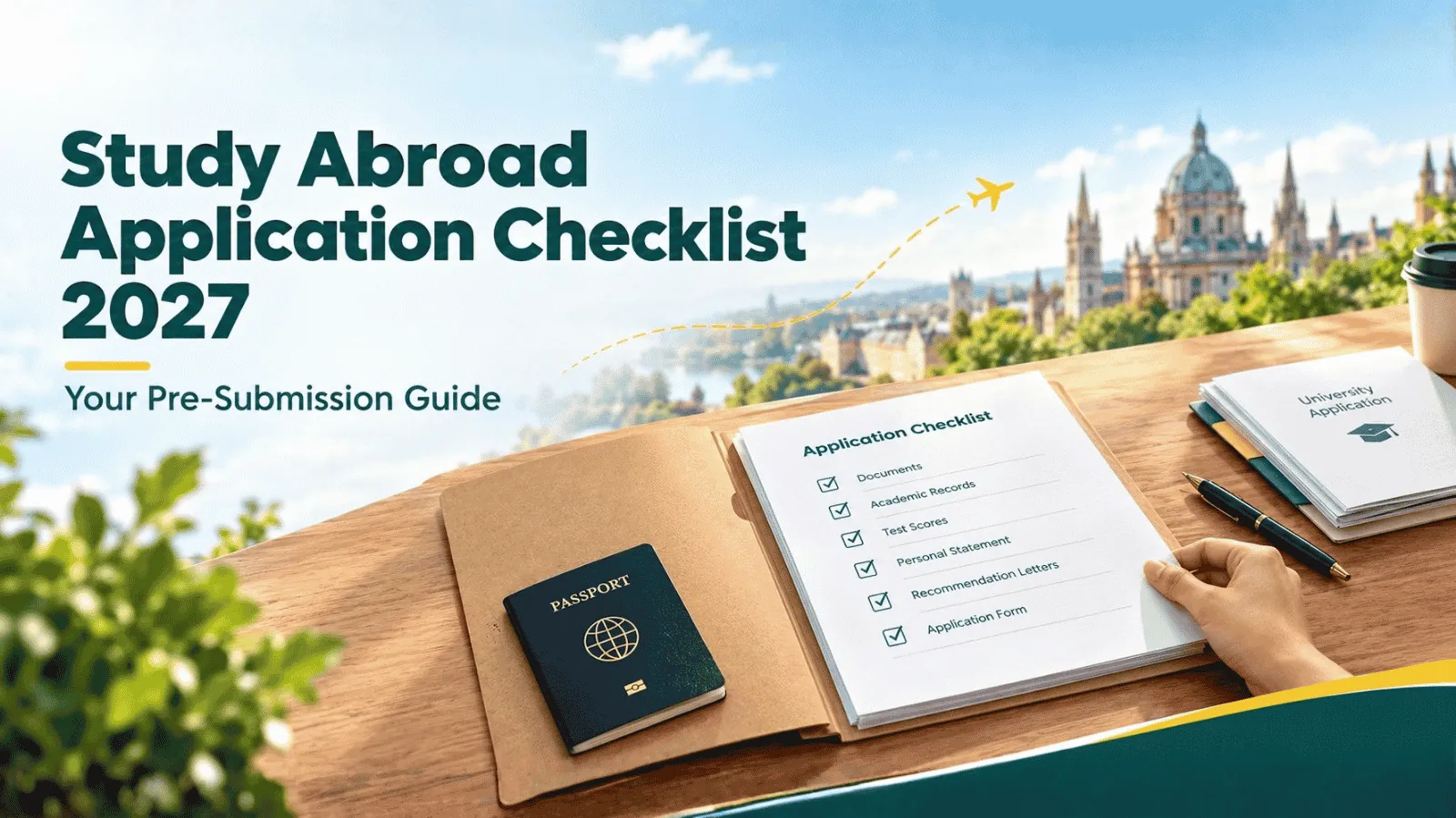
A typical application checklist includes:
A strong SOP for supply chain should mention a real problem you have seen, such as stock shortages in a family business or delivery delays during an internship. It should then show how the course will give you the skills to solve that type of problem.
Start with your career goal and your work rights, then shortlist programs. The best supply chain management courses abroad for you will match your academic background, offer real industry projects and sit in a country where you can work long enough after graduating to gain experience.
Follow these steps:
If you are an Indian student or young professional considering this field, the course name matters less than the system around it. A strong program, a clear post-study work route and a realistic budget together decide whether your degree turns into a global career.
Study Smart's counsellors help students match courses to market demand and career prospects, from IELTS training and country and university selection to scholarships, education loans and pre-departure support. Book a session through our study abroad counselling services to build a shortlist that fits your goals and budget.
Supply chain management is a strong choice if you enjoy data, planning and problem solving. US data projects 18% growth in logistician jobs from 2025 to 2035 (U.S. BLS, 2025). Your results will depend on your country, course quality and work experience.
Yes. Many supply chain master's programs accept commerce, BBA and economics graduates, as well as engineers. Check each university's entry requirements, since some programs expect maths or statistics in your bachelor's degree.
There is no single best country. The USA suits students who can get into a STEM-designated program, the UK offers shorter master's degrees, Canada offers a Post-Graduation Work Permit, which requires a language test minimum for all applicants and an eligible field of study for some college graduates, and Germany gives an 18-month job search permit. Choose based on work rights, budget and your target industry.
Most universities in English-speaking countries ask for an English test such as IELTS, TOEFL or PTE. The minimum score depends on the university and course. A higher score can also strengthen your application and scholarship chances.
An MS or MSc suits fresh graduates who want analyst and planning roles. An MBA with an operations focus usually suits candidates with a few years of work experience who are aiming for management roles. Compare cost, length and post-study work rights before you decide.



























-1749620108.png)



















-1791613809.jpg)












































-1750416362-1750417414.jpg)













-1789647708.png)
-1789648196.png)
 (1)-1787123243.png)


-1789648364.png)
-1789648032.png)
-1789647864.png)

-1789648649.png)




-1790228836.png)








 (6)-1792571238.png)





-1790399182.png)





-1790830806.png)