Choosing the right course is now just as hard as choosing the right country. Employers expect the fastest job growth in data, AI and clean energy, and the UK Graduate visa drops to 18 months for graduates who apply from January 2027. This guide ranks fifteen trending courses to study abroad in 2027 and pairs them with practical tips for study abroad planning, so Indian students and their parents can pick a degree with a real career payoff.
Key takeaways
- Technology and data courses lead the list because big data specialists, fintech engineers and AI and machine learning specialists are the fastest-growing jobs (WEF, 2025).
- Business, sustainability, health and design courses are strong choices when they include data or technical skills.
- Post-study work rules matter as much as rankings. The UK Graduate visa drops to 18 months for bachelor's and master's graduates who apply on or after 1 January 2027 (GOV.UK, 2026).
- Start planning at least a year before your intake so IELTS, your SOP (Statement of Purpose) and scholarship deadlines do not clash.
At a glance
- Fastest-growing jobs: Big data specialists, fintech engineers, and AI and machine learning specialists (WEF, 2025)
- Top field for international students in the US: Math and computer science, at 25% of international students in 2025/26 (Open Doors, 2026)
- UK Graduate visa: 18 months for bachelor's and master's graduates applying from 1 January 2027 (GOV.UK, 2026)
- USA work after study: 12 months of OPT, plus up to 24 more months for eligible STEM graduates (ICE, 2026)
- Germany tuition: Generally no fees for bachelor's and most master's courses at state universities, with exceptions in Baden-Württemberg and Bavaria (DAAD, 2025)
Which are the trending courses to study abroad in 2027?
The trending courses for 2027 are AI, data science, computer science, cybersecurity, cloud computing, fintech, business analytics, management, supply chain, renewable energy, electric vehicle engineering, robotics, public health, biotechnology and UI/UX design. These fields match fast global hiring growth and strong international student demand.
We built this list from three signals: global job growth forecasts, what international students actually enrol in, and the post-study work options in major destinations. Put simply, this is our list of trending courses to study abroad 2027: degrees that employers already value and that applicants should shortlist. The World Economic Forum's latest employer survey points clearly towards technology roles.
Big data specialists, fintech engineers, and AI and machine learning specialists are the three fastest-growing jobs in percentage terms, according to the World Economic Forum's Future of Jobs Report (2025).
Enrolment data tells a similar story. In 2025/26, math and computer science made up 25% of international students in the United States, engineering 19% and business and management 14%, with 57% in STEM fields overall (Open Doors, 2026). STEM means science, technology, engineering and mathematics.
Indian students are a big part of that picture. India sent 339,435 of the 1,146,163 international students in the US in 2025/26 (Open Doors, 2026).
Which technology courses lead the 2027 list?
Technology courses lead the 2027 list because employers expect the fastest job growth in data, AI and software roles. A master's in AI, data science, computer science, cybersecurity or cloud computing gives Indian students, especially those with a BTech or BCA background, a direct route into these jobs.
- Artificial Intelligence and Machine Learning. These programmes teach you how to build systems that learn from data. Expect heavy maths, Python and project work. The course suits problem solvers aiming for roles such as ML engineer or AI researcher.
- Data Science and Big Data Analytics. Data science courses cover statistics, data engineering and visualisation. Because big data specialists top the WEF growth list, a data science degree keeps its value across banking, healthcare, retail and tech.
- Computer Science and Software Engineering. Computer science is one of the most flexible technology choices, so it suits students who want to keep their options open. The WEF also lists software and applications developers among the fastest-growing jobs (WEF, 2025).
- Cybersecurity. Cybersecurity courses train you to protect networks, data and systems from attacks. The WEF places security management specialists among its top five fastest-growing roles, and graduates often move into cloud security, risk or audit.
- Cloud Computing. Cloud programmes focus on platforms, distributed systems and DevOps (the practice of combining software development with IT operations). A cloud computing degree suits students who prefer infrastructure to pure coding.

Which business and finance courses are in demand?
The business courses in demand for 2027 mix management with data and technology. Fintech, business analytics, a Master's in Management or technology-focused MBA, and supply chain management all appeal to employers who want graduates who understand both numbers and strategy.
- Fintech. Fintech blends finance with software, payments and digital banking. Fintech engineers rank second on the WEF fastest-growing list, which makes this course a strong pick for BCom, BBA and engineering graduates alike.
- Business Analytics. Business analytics teaches you to turn data into decisions using tools such as SQL, Python and dashboards. The course is a practical middle ground for students who like business but want technical skills on their CV.
- Master's in Management (MiM) and MBA. A MiM is a pre-experience business degree for recent graduates, while an MBA usually expects a few years of work experience. Look for programmes with modules in digital strategy, AI or analytics.
- Supply Chain and Logistics Management. Supply chain courses cover sourcing, operations and global trade. Companies are rebuilding supply networks, so graduates who can plan, forecast and manage risk stay in demand.
Which sustainability and engineering courses are growing?
Sustainability and advanced engineering courses are growing because the energy transition and automation are creating new jobs. Renewable energy engineering, electric vehicle engineering and robotics are the strongest options for Indian engineering graduates who want hands-on, high-impact careers abroad.
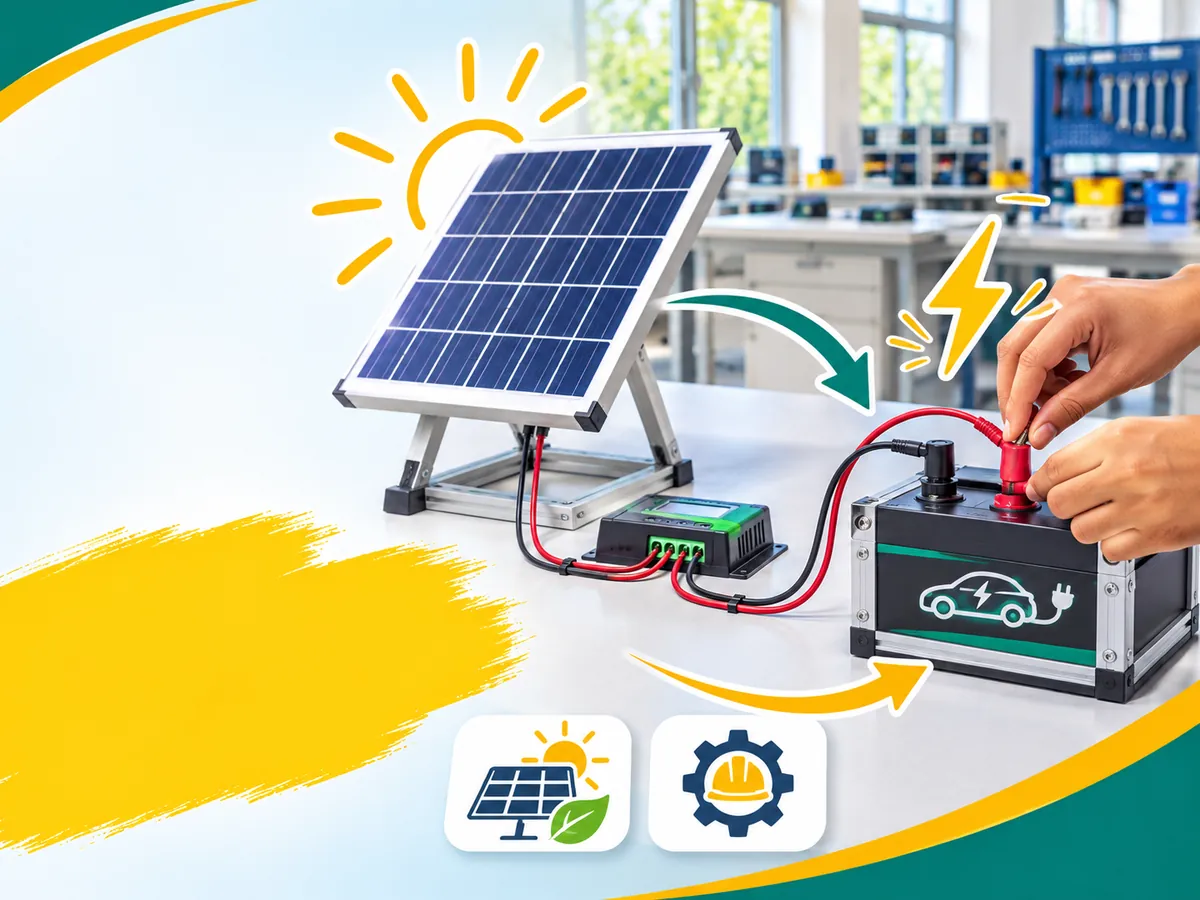
- Renewable Energy and Environmental Engineering. These programmes cover solar, wind, energy storage and environmental systems. The WEF lists environmental and renewable energy engineers among its top fifteen fastest-growing jobs (WEF, 2025).
- Electric and Autonomous Vehicle Engineering. EV courses focus on batteries, power electronics and vehicle software. Autonomous and electric vehicle specialists also appear in the same WEF top fifteen, and Germany is a natural fit thanks to its automotive industry.
- Robotics and Automation. Robotics combines mechanical engineering, electronics and AI. Graduates work in manufacturing, warehousing, healthcare devices and research labs.
Which health, life science and design courses are worth considering?
Health, life science and design courses are worth considering if you want a career outside pure technology. Public health, biotechnology and UI/UX design all reward a mix of subject knowledge and digital skills, and they suit students from science, pharmacy, medical and creative backgrounds.
- Public Health. A Master of Public Health (MPH) covers epidemiology (the study of how diseases spread), health policy and data. The degree suits MBBS, BDS, nursing and life science graduates who want to work in policy, research or global health.
- Biotechnology and Life Sciences. Biotech courses cover genetics, drug development and bioprocessing. Strong lab skills plus some data analysis make graduates attractive to pharma and research employers.
- UI/UX and Interaction Design. UX (user experience) design is about making apps and websites easy to use. Design courses suit creative students who also enjoy research and testing, and a strong portfolio often matters more than grades.
Which country suits each course?
The best country depends on the course and on your post-study work plans. The USA suits STEM courses, Germany suits engineering on a budget, the UK suits one-year master's degrees, and Canada suits students in any subject who want up to three years of work after a master's.
At a glance
- USA: Best for AI, data science and computer science. Eligible STEM graduates can add 24 months to the standard 12 months of OPT (ICE, 2026).
- UK: Best for one-year master's in business, fintech and public health. The Graduate visa lasts 18 months if you apply from 1 January 2027 (GOV.UK, 2026).
- Canada: Best for data, supply chain and health courses. Master's graduates may get a post-graduation work permit of up to three years (IRCC, 2024).
- Germany: Best for EV, robotics and renewable energy. Baden-Württemberg charges non-EU students EUR 1,500 per semester (DAAD, 2025).
If you plan to study in Germany, check the state as well as the university. DAAD notes that Bavarian institutions may now charge non-EU students several thousand euros per semester, and each institution sets its own fee (DAAD, 2025). If you plan to study in USA on a STEM programme, confirm that it carries a STEM designation before you apply, because that decides whether you can use the OPT extension.
For a deeper comparison of costs, culture and career routes, read our guide to the best country to study abroad for Indian students.
What are the best courses to study abroad for Indian students from different backgrounds?
The best course is the one that builds on your undergraduate degree and leads to a job you can name. Engineers usually do best in AI, data or EV programmes, commerce graduates in fintech or analytics, and science graduates in biotech or public health.
Here is a simple way to match your background to the list above:
- BTech or BE (CS, IT, ECE): AI and machine learning, data science, cybersecurity or cloud computing.
- BTech or BE (mechanical, electrical): EV engineering, robotics or renewable energy.
- BCom, BBA or economics: Fintech, business analytics, MiM or supply chain management.
- BSc, BPharm or life sciences: Biotechnology or public health.
- MBBS, BDS or nursing: Public health or health data programmes.
- BA, BDes or architecture: UI/UX and interaction design.
A switch between fields is possible, but expect bridging modules or a stronger SOP that explains why you are changing direction. Admissions teams want to see a clear link between your past, the course and your future career.
What are the most useful tips for study abroad applications in 2027?
The most useful tips for study abroad applications are to start early, choose by career outcome, book IELTS in good time, write a course-specific SOP and secure funding before your visa appointment. Following these steps in order helps you avoid last-minute surprises.
- Shortlist by career outcome, not just ranking. Look at the jobs graduates actually get, the industry links of the department and the internship options.
- Check post-study work rules for your intake. In the UK, your Graduate visa length depends on when you apply, not when your course starts (GOV.UK, 2026).
- Book IELTS early. Most English-taught programmes ask for an English test score, and requirements vary by university and course. Leave time for a retake if you need a higher band.
- Write a course-specific SOP. Explain why this exact course, why this university and what you will do after graduating. Generic SOPs are easy for admissions teams to spot.
- Plan funding and scholarships together. Apply for university and government scholarships alongside your admission applications. Our guide on how to get scholarships to study abroad explains the main options.
- Prepare financial proof for the visa. For example, non-EU students applying for a German study visa must show they have 992 euros per month available (DAAD, 2025).
- Plan your arrival. Arrange housing, insurance and a local bank account before you fly. Tips for studying abroad in London, for instance, usually start with booking student housing early because central areas fill up fast.
What this means for you
For Indian students and parents, the message is simple: pick a course that employers are already hiring for, and pick a country where you can work long enough after graduation to repay the investment. A strong course in the wrong country, or a famous university with a weak career fit, can waste years of savings.
Study Smart has guided over 6000 students to universities in 12 countries, serving students in cities like Delhi, Pune, Mumbai, Nashik and Hyderabad (Study Smart, 2025). Our counsellors have trained with the British Council, Education New Zealand and Education Ireland, and they are certified for student counselling by NBCC, UK. Whether you need study abroad consultants in Pune or study abroad consultants in Delhi, we cover the full journey: course shortlisting, IELTS coaching, application and SOP guidance, scholarships and visa preparation.
The best tips for study abroad success only work when they fit your profile, so talk to an expert before you finalise your shortlist. Book a session through our study abroad counselling services and get a course and country plan built around your goals and budget.
Frequently asked questions
Which course is best to study abroad in 2027?
The best courses to study abroad for Indian students in 2027 are in AI, data science, computer science, cybersecurity and fintech, because these match the fastest-growing jobs. Engineering students should also consider EV engineering and renewable energy. The right choice still depends on your degree, budget and career goal.
Is a STEM course better for working after graduation?
In the USA, a STEM course can be a big advantage. Eligible STEM graduates can add 24 months to the standard 12 months of OPT (ICE, 2026). Other countries such as the UK and Canada offer post-study work to graduates of all subjects.
When should I start preparing for a 2027 intake?
Start at least a year before your intake. This gives you time to take IELTS, write your SOP, request recommendation letters and meet early scholarship deadlines. Students aiming for top universities or major scholarships should start even earlier.
Can I study in Germany without paying tuition?
In most cases, yes. State universities in Germany generally charge no fees for bachelor's and most master's courses, but Baden-Württemberg charges non-EU students EUR 1,500 per semester and some Bavarian institutions also charge fees (DAAD, 2025). You still pay a semester contribution and living costs.
Do I need IELTS for these courses?
Most English-taught programmes in the UK, USA, Canada, Australia and Europe ask for an English language test such as IELTS. The required band score varies by university and course, so check each programme page. Preparing early lets you retake the test if you need a higher score.
Related resources
-1751978393.webp)

















-1749620108.png)









-1791613809.jpg)




































-1750416362-1750417414.jpg)






-1789647708.png)
-1789648196.png)
 (1)-1787123243.png)


-1789648364.png)
-1789648032.png)
-1789647864.png)

-1789648649.png)


-1790228836.png)






 (6)-1792571238.png)



-1790399182.png)


-1790830806.png)